



 ReputatioLab, Saper Vedere's laboratory for crises and reputation · File updated on 13 September 2026 · reputatiolab.com →


Publication rhythm
What thirteen years of analyses teach about online mobilisation
- A digital demonstration needs few people. In 2015, #Libéracisme and #Dilcragate produced 17,700 tweets from 4,640 accounts, and the second gathered only 621 users. That was enough to become a press story. See the analysis
- Volume is made of repetition, not of people. In the campaigns against agricultural projects, 87.4% of the corpus is made up of reposts and 71.4% of authors post on a single day only. See the analysis
- The question is not “astroturfing or not” but “who starts it”. On #SaccageParis, 218 accounts account for 34.7% of tweets, against 89% in the Benalla affair. See the analysis
- A petition's counter proves nothing. Philippe de Villiers's petition shows 1,878,874 signatures but comes from the media and the party, with no share button. See the analysis
- Data does not foresee anger. Before the agricultural mobilisation, the themes that would carry it weighed nothing, and the ratio between those who post and the passive is estimated at 30-70. See the analysis
- Whoever stays silent loses the narrative. The negative/positive ratio reaches 12:1, and Pure Salmon published almost nothing while 20,000 people filled in the public inquiry. See the analysis
The mechanics: few actors, a lot of noise, and the press takes over
The headline figure of an online mobilisation is almost never the number of people behind it: it is the number of messages a small group has produced. The distinction separates a rising opinion from a machine that is running.
On #Libéracisme and #Dilcragate, the ratio is 5 tweets per user before even counting retweets. One account posts the same hashtag 41 times, others 17 times. The analysis embraces the comparison with a demonstration: people chant the slogan several times there. Except that online, a single actor can chant forty times.
- A rallying hashtag is created. It serves as a meeting point and makes the mobilisation measurable, and therefore quotable.
- The network's nodes relay. A few already established accounts give the signal.
- Messages multiply. Some post the hashtag 40 times, which is enough to become a trending topic.
- Other communities are alerted and react, sometimes with no link to the original subject.
- The press takes over. In the Libération case, it is Le Figaro that opens the coverage.
- The far right sidesteps the hashtag to install the opposite version, which prolongs the sequence.
It takes just 600 people tweeting to make a voice heard and create a controversy relayed in the media.
ReputatioLab, Online demonstrations, 2015Ten years later, the mechanics have become industrialised. On contested agricultural projects, 71.4% of authors post on a single day only, and just 21 authors, or 0.2%, stay active for more than eleven days. Outside X, the corpus is residual: Bluesky 1.8%, Reddit 0.7%, forums 0.2%.
Slacktivism produces numbers, rarely effects
The channel does not replace the target: noise only reaches a decision-maker if a media outlet makes the link on their behalf.
Genuine mobilisation or astroturfing: what separates the two
The word comes from the American senator Lloyd Bentsen, who coined it from the name of a synthetic turf imitating natural grass: it sets movements born on the ground against attempts to simulate a groundswell. The web has given the technique scale, and the signs look similar enough that the verdict is rarely simple.


Who starts it, and when. The screenshots that circulate show the end of the propagation: on #SaccageParis, Marine Le Pen only arrives afterwards.
The share of hyperactive users. 34.7% of tweets produced by 1% of accounts is still acceptable, 89% no longer is.
The age and size of accounts. 37% very small accounts on #Libéracisme, 34% on #Dilcragate, 64% under 100 followers at Uber.
What lies behind. Photos taken on the spot cannot be fabricated.
The platform that hosts it. A site with no verification cannot vouch for its counter, whichever camp it belongs to.
In social movements on social media, it is essential to understand their creation and propagation in the early stages.
ReputatioLab, #SaccageParis, 2021The analysis adds a warning that an organisation under attack can take up: never speak in generic terms - “the French”, “Parisians”, “internet users”. What is expressed is a portion of stakeholders, never a population.
The farming world, a full-scale laboratory
Seven analyses in the dossier deal with agriculture. The sector serves as a testing ground: established unions, mobile activists, contested projects and record petitions coexist there.
Two models of influence that never cross
In January 2025, Coordination rurale goes from leading in 3 departments to 14 in the chamber of agriculture elections, and the FNSEA-JA duo falls below the 50% mark for the first time in its history.
The coverage gap is now only 28%, and it reverses where images count. Lobbying, for its part, remains asymmetric: the FNSEA obtains 81 favourable amendments in the Duplomb law alone, whereas Coordination rurale filed no HATVP declaration in 2024 but published 4,903 messages. The analysis sums it up: tractors on the motorway replace meetings at the ministry.
The two audiences do not talk to each other. Fewer than one follower in ten is shared by the two unions on X, and on TikTok the border is almost watertight, with 43 shared accounts out of more than 10,000. More notably, the first community of Coordination rurale's followers is not agricultural but sovereigntist, with the farming world making up only about a quarter of the audience.
X
 TikTok
 Bluesky
 Rassemblement national
The role does not pass on the audience
The analysis of the two FNSEA presidencies holds for any organisation that changes leader. The bases of Christiane Lambert and Arnaud Rousseau barely overlap, even though 58% of the latter's audience also follows the former. On LinkedIn, 68 posts gather nearly 3,900 unique actors, with 20 journalists interacting regularly and 45 political leaders reached, against 11,240 accounts that liked at least once under his predecessor.
Data does not predict anger
In 2024, ReputatioLab asks the question frankly: were the signals there? In a panel of 17,000 journalists, political leaders and lobbyists, the agricultural show generated 9,519 mentions over the year, the mobilisation 2,533. Above all, the subjects that would carry it - foreign competition, free-trade agreements, standards - weighed nothing beforehand. The first call to turn the road signs upside down had received media pick-up close to nil.
Data is not, and never will be, predictive when it comes to social matters.
ReputatioLab, Data is not a crystal ball, 2024The cause is a production bias: social data has to be produced to exist, and the ratio between those who create content and the passive is estimated at 30-70. When 70% of people do not appear in it, what is measured is not an opinion but an expression.
When politics takes up all the space
The 2024 agricultural show offers the extreme version: out of 1.3M tweets, 90% are retweets, and out of 1,300 messages, only 130 are original. The farming message fades while parties and media occupy the network.
The same pattern in 2023 on neonicotinoids. The minister sees 2.6 times more messages from angry farmers than from environmentalists in his feed, and it is the media that produce most of the measured impact on him. The RN, absent during the 2020 crisis, invests in it this time through the parliamentary route: a European decision to challenge, jobs under threat in its constituencies.
The petition as a new thermometer
In July 2025, the petition against the Duplomb law became the most viral since the mechanism was created: 11,759 signatures in under 24 hours on 16 July, more than 460,000 on 21 July alone, and 1.5 million by the 22nd. Around 583 opinion leaders mobilised within a week, for 8 million impressions and more than 156,000 shares. Until then, only one petition had passed 100,000 signatures since 2020.
Momentum can be measured on a neighbouring petition, against acetamiprid: 123 signatures in 35 days before 15 July, or 3.5 per day, then 2,784 signatures in 7 days, or 398 per day. But the threshold of 500,000 signatures for a debate in the chamber creates no obligation: this debate “will in no case be able to reverse the law passed”.
The public inquiry, designed as a tool of local democracy, has become a reputation KPI.
ReputatioLab, Farming struggles, 2026The same shift affects projects. Sainte-Soline and the mega-basins account for 55.5% of posts with 9,590 mentions, far ahead of factory farms and their 2,154 mentions. Mobilisation is deterritorialised: Paris accounts for 40% of geolocated tweets, 985 out of 2,461. The public inquiry fills up with contribution kits: 20,000 contributions for Pure Salmon, 1,458 negative against 252 positive for the EMME refinery. Groupama refused to insure the basin construction sites.
 Groupama
Pure Salmon
FNSEA
Coordination rurale
Groupama
Pure Salmon
FNSEA
Coordination rurale
NGOs, executives, employees: the message before the channel
The other half of the dossier looks at those who mobilise. The oldest finding remains the soundest: what makes a brand bend is not audience, it is indignation.
A real message is one that outrages everyone and that can be carried without artifice.
ReputatioLab, Why Greenpeace has not understood its own success, 2013The ethical counterpart comes from the case of “Mon école pour Lina”: a fake blog by a mother, set up for an NGO and picked up by bloggers who claimed to have discovered it by chance. The question it raises never closes: if an organisation fabricates a fake case, who guarantees that the figures in its studies are true?
When a business leader does better than an NGO
LinkedIn
Yuka
The case of Julie Chapon shows the opposite of the NGO logic: a business leader who does without intermediaries. Her last 100 posts gather 118,489 likes from 66,439 unique accounts, 6 times more audience than the executives of the SBF 120, and 558 journalists liked at least one post, 179 of them repeatedly. A petition against aspartame gathered more than 230,000 signatures, and 92% of the app's users say they put back a product rated red on the shelf.
The result is limited: this audience contains almost no NGOs, no political actors, and not the industrial companies targeted. Engagement has fallen from more than 20k in 2021 to around 5k. The network will struggle to establish itself as a space for applying pressure: 60% of the people who like an executive's account do not even follow it.
Two activisms, two networks, three points of junction
The 2025 activism panorama, covering 30 associations and 30 activists, describes an institutionalised progressive ecosystem, structured around radical ecology, present on Bluesky and closed in on itself: other struggles are made invisible there. Conservative activism gathers around elected officials and media figures, is established on X, and connects far better with public authorities and the press.
The two camps do not attack on the same grounds, but they converge on three subjects: animal welfare, job losses and pharmaceutical laboratories. An organisation can be caught from both sides at once.
Mobilising your own employees solves nothing
What remains is the internal temptation. The analysis of employee advocacy measures, on the public case of Anses, the interactions of 7,514 people who liked employees' posts: most are dormant, and interactions remain isolated outside the communications departments. On top of that comes a rule valid for any spokesperson: as soon as an employee takes up the company's words, they lose authenticity, the one asset the organisation does not have.
What this changes for an organisation
These analyses do not describe all-powerful activists, but a capacity to cause damage that is easy to produce and hard to read, and a project owner who discovers the subject when it has already been written by others.
For project owners, the real issue is no longer whether they have the right to build - the Duplomb law gives them more and more room. It is whether they can build in an environment where opponents' capacity to cause reputational damage has been multiplied by ten in three years.
ReputatioLab, Farming struggles, 2026- Build coalitions from the moment the project is written. Otherwise it is too late: once the subject is loaded, there is nobody left to defend it.
- Occupy the narrative ground, even when all is well. “Let us live happily, let us live hidden” leaves the space to opponents.
- Read counters with their denominator. Share of the most active 1%, share of reposts, age of accounts, platform hosting.
- Aim at the media, not the network. Sporting actions or neonicotinoids: it is the traditional media that produce the impact on political leaders.
- Build a message that carries without a user manual. A campaign that makes people laugh only mobilises the already convinced.
- Do not expect data to announce the crisis. It serves to objectify, and to know how biased an indicator is.
One question remains, which the dossier raises without settling: who is ultimately a minority - the activists, the company, or the political leader who arbitrates? The decision, for its part, falls to whoever prepared the ground before the subject broke.
The analyses behind this file
Each lesson in this file points to one of these articles, published by ReputatioLab. They are sorted by sub-theme, from most recent to oldest.
The farming world
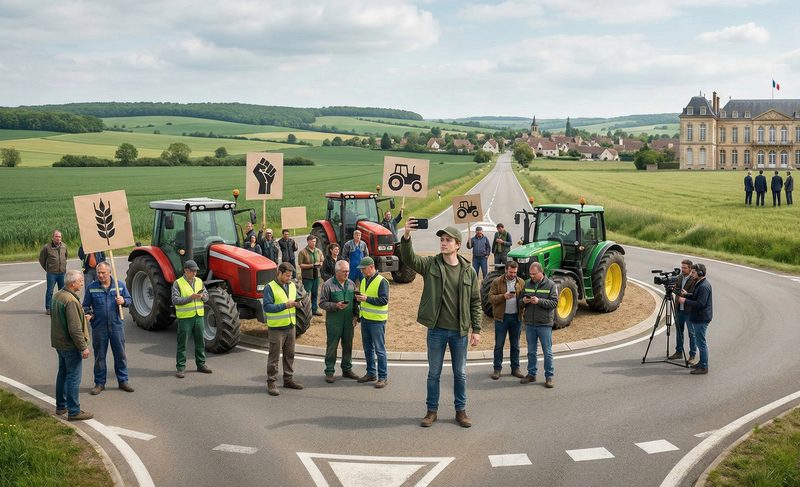
Coordination rurale vs FNSEA: a clash of cultures and audiences
For a very long time, when people talked about agricultural trade unionism in France, there was only one reflex: look at what the FNSEA was saying. It had been that way since the 1960s. The State's sole interlocutor, the co-manager of French agricultural policy, the union with which everything was negotiated.
Read on ReputatioLab →
Farming struggles: how a minority of activists manages to take the upper hand
The agricultural show is about to open its doors and, apart from lumpy skin disease, generational renewal and innovation, I was wondering what would be relevant to tackle. After sounding out the sector, one subject appealed to me a great deal: can large-scale projects still be carried out in agriculture in this country today?
Read on ReputatioLab →
Duplomb law: the first real test of the citizens' petition mechanism launched by the National Assembly in 2020.
What if Article 10 became the last resort of a Parliament jostled by 1.5 million signatures? As a reminder, on 11 July 2025, the petition was put online on the National Assembly platform. On 22 July: 1.5 million cumulative signatures.
Read on ReputatioLab →
The FNSEA presidency: does the role make the audience?
The FNSEA presidency is a strategic post, at the crossroads of social dialogue, lobbying and crisis management. But beyond the influence the role confers in the farming world and with the public authorities, does it also generate a real media audience?
Read on ReputatioLab →
The agricultural show: behind the politics, what is a trade fair for?
A threatened opening, an ultra-political show and a crisis on the eve of the European elections: all the ingredients were there for some fantasy at this agricultural show, with visits down slightly.
Read on ReputatioLab →
Analysis of the farmers' protest: data in public affairs is not a crystal ball
We are emerging from a strong mobilisation of farmers who voiced their exasperation with a whole series of demands. Was this uprising foreseeable? How was it expressed? Were signals not heeded? I thought it would be interesting to return, with data, to what preceded this mobilisation.
Read on ReputatioLab →
Neonicotinoids: a war between farmers and environmentalists, with the RN lying in wait
Following a European decision, the French government had to announce the end of the derogation allowing the use of neonicotinoid-coated seeds. This sudden announcement comes badly for the farmers who demonstrated this Wednesday.
Read on ReputatioLab →Activism, collectives and NGOs

Does mobilising employees boost company strategy?
For some years now, employee advocacy has been presented as the ultimate solution for engaging staff, strengthening the employer brand and increasing companies' organic visibility. This concept, in which employees become ambassadors for an organisation on social media, dangles the prospect of fabulous positive spin-offs, yet many companies have come unstuck with it.
Read on ReputatioLab →
The 2025 activism panorama
We are launching the Activists Panorama in partnership with No Com! On 3 June, we presented the results of our very interesting study on the forms of activism and observed the differences between them. The summary I.
Read on ReputatioLab →
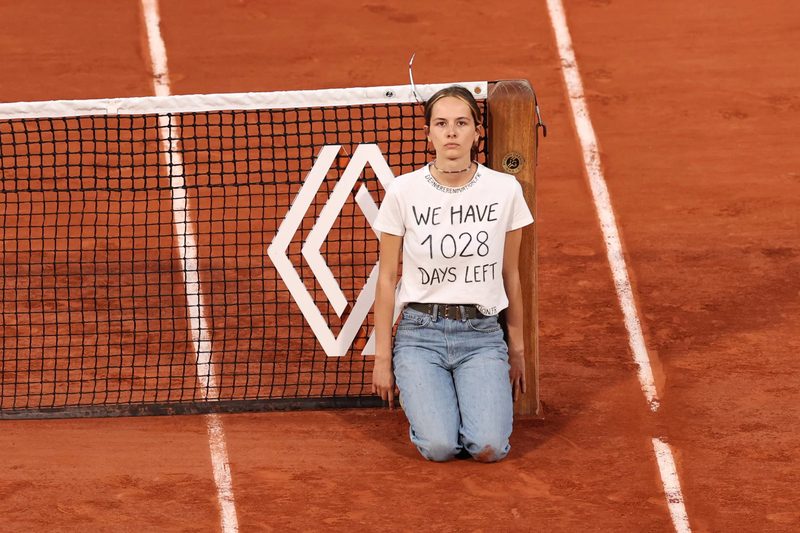
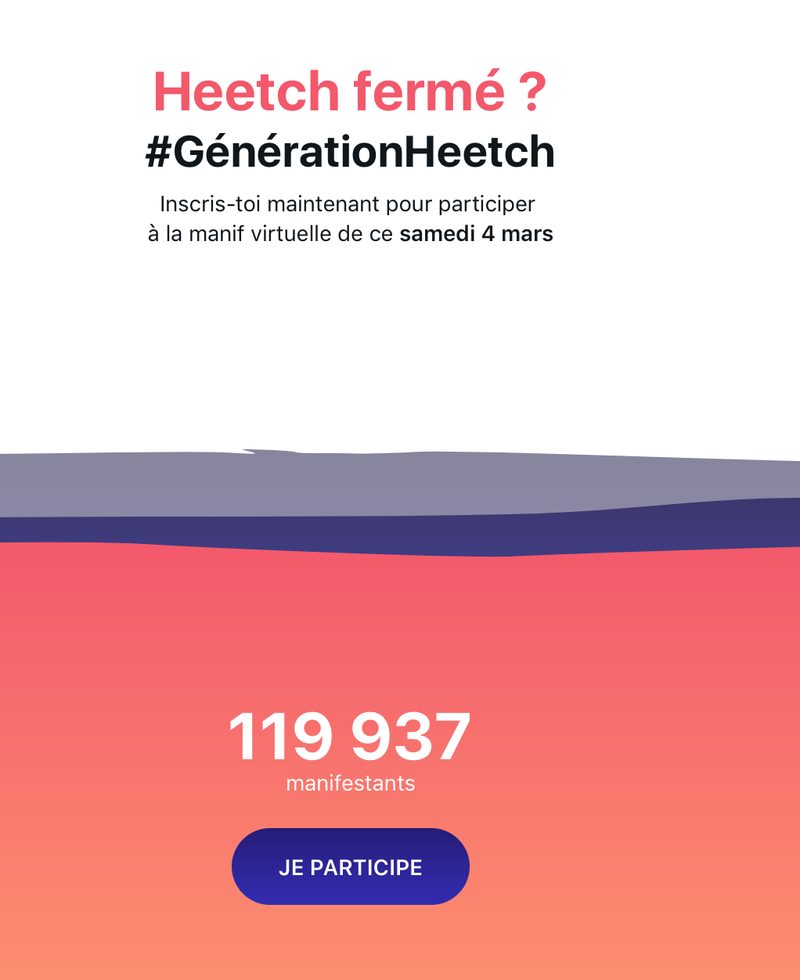
GénérationHeetch, or the difficulty of mobilising, even with slacktivism
This Saturday at 12 noon, Heetch launched a “digital demonstration”, pushing the logic of digital labour to its extreme. What set-up was in place? Was it a success? The answer lies in a short analysis showing that today, even with slacktivism, it is hard to mobilise one's troops. I.
Read on ReputatioLab →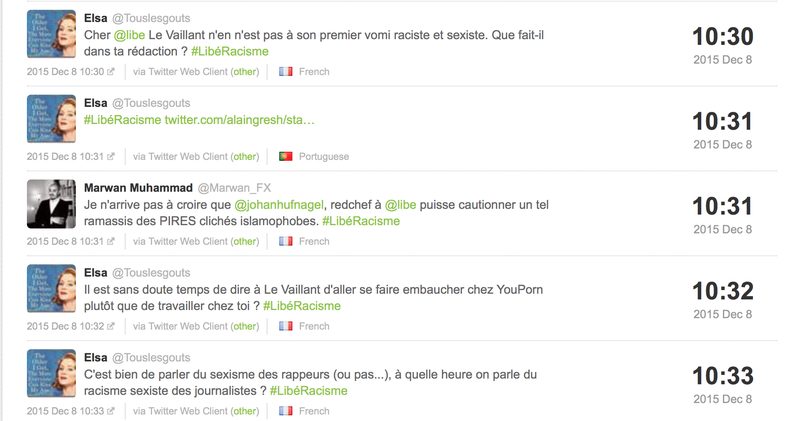
#Libéracisme, #Dilcragate: 2.0 demonstrations? We are there!
I love crises with a specific hashtag on which it is easy to extract data for analysis. That is why I looked at the hashtags #Liberacisme and #Dilcragate.
Read on ReputatioLab →
Mon école pour Lina: when an NGO and bloggers look like fools
Alerted by Sophie Gourion, I came across a rather pitiful case of NGO communication. While the attempt may have been clever, common sense seems far from some NGOs, while some bloggers like to pass for fools. A case illustration. I. Introduction Around early September, a blog called “Mon école pour Lina” is born.
Read on ReputatioLab →
Why Greenpeace has not understood its own success
I began my research following the Nestlé crisis. It is what pushed me to look further, what made me believe that in an instant a brand could bow to consumers, and so led me to that big cliché which I fortunately set aside very quickly in order to put on a researcher's hat.
Read on ReputatioLab →Genuine mobilisation or astroturfing?
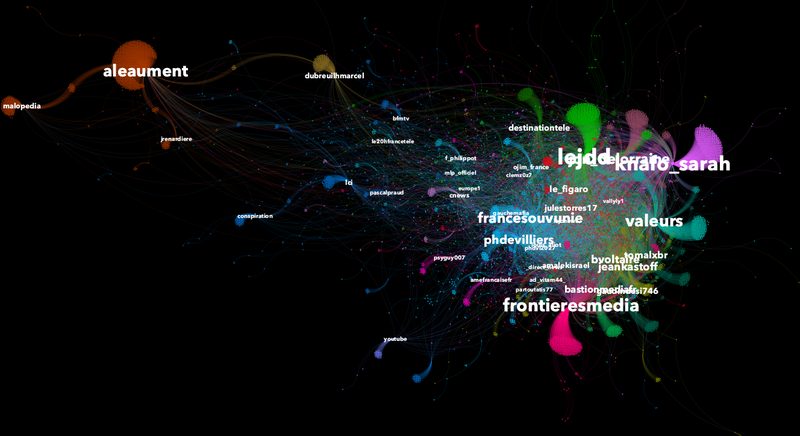
The de Villiers petition: how Reconquête is trying to mimic left-wing mobilisations through astroturfing
Already 1,878,874 signatures out of 2,000,000! This is the impressive figure that introduces the petition launched by Philippe de Villiers, calling for a referendum on immigration.
Read on ReputatioLab →
#SaccageParis: astroturfing or activist operation?
Yesterday morning, on the RTL morning show, Anne Hidalgo wanted to take stock of the #SaccageParis campaign run on social media, which she accuses of being an astroturfing movement led by the far right. So what is really going on? Analysis via Brandwatch What is astroturfing?
Read on ReputatioLab →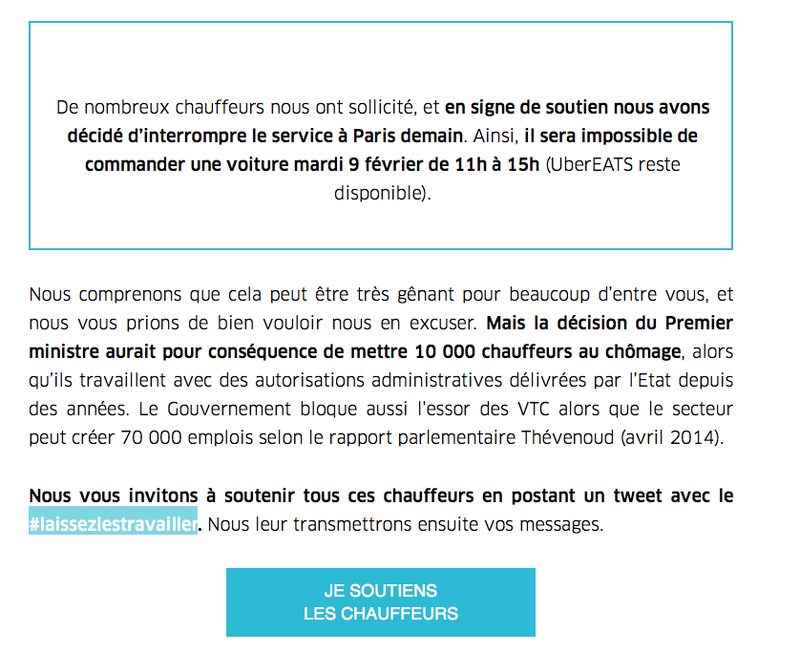
Uber France's #LaissezLesTravailler campaign: a popular mobilisation or astroturfing?
Remember, I told you about the lobbying situation between Uber France and the Paris taxis. Since then, things seem to be going very badly for Uber, with a government that appears to lean towards the taxis.
Read on ReputatioLab →