



 ReputatioLab, Saper Vedere's laboratory for crises and reputation · File updated on 13 September 2026 · reputatiolab.com →


Publication rhythm
What twelve years of observing digital crises teach us
- There are fewer and fewer crises, and they are less and less serious. The 2025 study records 42 digital crises, whereas the 2014-2019 period systematically exceeded a hundred, and 71% of them are level 1, with no lasting impact. See the analysis
- The number of messages is not the number of people. The Tefal bad buzz came down to 450 tweets before the first article, and that of Fleury Michon to 1,125 tweets posted by 582 people. It is media pick-up that gives the noise its impact. See the analysis
- The trigger is never the cause. Primark investigated the label instead of answering on its ethical and social practices, and the analysis sums up the mistake in one sentence: when the wise man points at the crisis, the fool looks at the bad buzz. See the analysis
- A measurable effect on business remains extremely rare. Of 105 cases studied, only 2 had visible effects, Nestlé very briefly and Kryptonite lastingly. See the analysis
- Monitoring does not prevent a bad buzz. In a corpus of 118 cases, 9 could have been prevented, or 7.62% since 2004, and discontent is voiced within 10 hours of the event. See the analysis
- The decisive audience is the one that stays silent. In the hijab crisis, it is pointed out that the bystander represents 90% of the audience against 1% of production, and it is the bystander who turned the narrative around when the brand cast itself as the victim. See the analysis
Twelve years of study: what changes from one year to the next
The “lessons from digital crises” series is the backbone of this file. It begins with the 56 crises of 2013, goes through a 2014 with 104 cases, reaches its ninth consecutive edition in 2022, and continues in 2025 after twelve years of existence. Its method has been open from the start: as early as 2014, the author wrote that all the data are available and open to challenge, and published every case in full. That is what makes it possible today to compare years with one another without changing the measuring instrument.
| Year | What the study concludes | The figure that sums it up |
|---|---|---|
| 2013 | Confirmation of the “crisounettes” (minor flare-ups) and the explosion of Twitter as a venue for discontent | 88% level 1 crises, Twitter at 49% against 33% for Facebook |
| 2014 | The phenomenon becomes industrialised, the site's corpus becomes a statistical database | 104 cases over the year, 238 crises accumulated |
| 2019 | The bystander becomes a weapon, participatory campaigns get hijacked | 7 lessons, including society being in crisis more than the organisation |
| 2020 | Covid distorts everything: fewer cases, other sectors, seasonality that mirrors the lockdowns | 12.6% of crises are caused by coronavirus |
| 2021 | Volumes shift towards crises between politics and organisations | Wokism accounts for 15% of crises, #SaccageParis totals 2,301,990 tweets |
| 2022 | Volumes return to normal, and a blind spot widens | Ninth consecutive year of the study |
| 2025 | Few crises, but massive volumes when they break through, and AI as a motive | 42 crises, up 35.48% on the 31 cases of 2024 |
What does not change from one year to the next
One constant runs through the whole series: the vast majority of crises leave no trace. In 2013, the study speaks of 88% of level 1 crises and borrows from Didier Heinderich the idea that people drift from emotion to emotion, from crisis to crisis. Twelve years later, the proportion is 71%, and only 7% reach level 3. The vocabulary has changed, the reality has not: nobody can remember more than one crisis a week.
The second constant is concentration. Fewer crises does not mean less noise: in 2025, two cases enter the all-time ranking of volumes on X, Kick with 822,580 tweets and Astronomer with 498,086 tweets, while staying well short of the records set by CrowdStrike in 2024 with 2.67 million and H&M in 2018 with 2.4 million. Attention is concentrated on a small number of affairs, and those affairs carry great weight.
What changes: the platforms, then the values
The shift in venues is clear and documented year by year. In 2013, Twitter dominates with 49% presence against 33% for Facebook, and the study notes the very first crisis born on Instagram. In 2021, Instagram establishes itself with 17% of the crises commented on and TikTok arrives at 5.7%. In 2025, the shift is elsewhere: Reddit rises to 11.90%, LinkedIn grows by 7.14%, Facebook collapses to 2.38% and Instagram falls back to 16.67%. Usage is moving towards more community-based spaces, where groups expert in their subject carry a reasoned and lasting discontent.
Far too many organisations today miss out on plenty of specific debates simply because LinkedIn is not among the traditional networks.
ReputatioLab, Lessons from digital crises in 2022The motives, for their part, follow society. Anti-science appears as a value of discontent in 2019 with the Petit Bateau case and its anti-wave accessories, and is confirmed in 2020. Wokism accounts for 15% of crises in 2021, falls back to 3% in 2024, then rises again to 10% in 2025, when nationalism reaches 9%. The novelty of 2025 is artificial intelligence, which feeds three families of grievance: ethics in 43% of crises, marketing in 36% and malfunction in 21%.
 Caught in a pincer The withdrawal of adverts from the far-right outlet Frontières, after a report by Sleeping Giants, triggers symmetrical accusations: ideological censorship on one side, responsibility on the other. The same year, the retailer urgently withdraws a chainsaw manual presented as suitable “for women and the elderly”. Read
The mechanics: a trigger, communities, a loop
The file contains a theory, built from 2013 and tested case after case. A crisis is not born of discontent: the discontent is already there, latent, and nobody says so. This is the bystander effect. It takes a particular event, called the trigger, to break that effect and make the problem visible: a shared negative comment, an emotional element, a moment when the evidence of the malfunction is at its height, or an influential relay. Only then does visibility come, through users or directly through the media.
Bad buzz should be seen as an invisible crisis that had been brewing for a long time inside the company and has just hatched.
ReputatioLab, Where the wise man points at the crisis, 2013This mechanics explains why small organisations are little affected: with fewer witnesses, discontent is voiced directly, and there is no dam to burst. It also explains what the author asserts in 2013 about the cases in his corpus: 90% of them are internal crises.
The typical path of a controversy
The 2016 burkini analysis formalises a path previously observed with the Reims bikini, #TelAvivSurSeine and the fake attack in Aubervilliers. It reappears almost intact in the bedbug controversy seven years later, where only the order of the political players changes.
- A micro-event occurs. An assault, a private event, a photograph. Nothing that, in itself, justifies a national sequence.
- A network node picks it up and spreads it. The success of this spread is counted in 200 to 300 retweets, no more.
- A political figure or a newspaper lends authenticity to the debate. It is this step that turns activist agitation into a legitimate subject.
- Other media pile in. The analysis calls this the “open bar” period: anyone who wants to talk about it is welcome, and geopolitical or sociological readings take over to show that the micro-event is not one.
- Other political figures follow. Nobody can leave the field open, then come the op-eds calling for people to rise above it.
- Either a related event restarts the sequence, or the affair falls into total oblivion.
At the scale of a brand bad buzz, propagation follows a different pattern, described hour by hour in the #jesuisparisienne case. The complainant first mobilises her own network, which forms a broadcast network. If the message is self-sustaining, small communities form around new people: this is the community cluster. Finally, these communities refocus on the complainant and form a support network. The case goes from the usual 2,000 tweets to more than 10,000, and it takes more than four hours to pass 4,000 tweets, which made it possible to film it step by step.
This reading draws on a typology from the Pew Research Center used throughout the file: polarised crowd, tight crowd, brand clusters, community clusters, broadcast networks, support networks. Its value is operational. A tight crowd runs in a closed circle and reaches almost no one else. A brand cluster, by contrast, is described as the most dangerous scenario, because the noise comes from multiple sources with no group effect, and therefore no influencer through whom to restore the situation. And in a support network, the only thing to address is the centre, never the crowd around it.
The media loop and the reactive paradox
Two effects push volumes up without any player deciding it. The first is the media loop: trending brings extra messages, articles feed the conversation, and the conversation justifies new articles. On #payetonuterus, the bot accounts that announce trends account for up to 500 of 12,000 tweets, or 4% of the total, without a single human having spoken.
The second is the reactive paradox, defined as reacting negatively to a message you dislike, when that reaction gives it visibility. The most telling case is that of a hate hashtag launched after an attack: of 36,410 participating accounts, only 3,067 are anti-Islam, and the twenty most-shared messages, which account for 31,011 of the 66,078 tweets on the first day, are all messages of condemnation. The spread is driven by those who are fighting the hashtag.
When this mechanism is used deliberately, it has a name: the communication artefact, defined as a material or immaterial pretext that serves as bait for the press for the sake of visibility. The analysis of #JeNeSupportePasLesBleus, a campaign against domestic violence, shows both its reach and its limit. It gathers only 10,345 tweets, the key is given two minutes after the initial tweet, which prevents doubt from setting in, and the audience reached is 39.5% Parisian. An artefact wins attention, not conversion.
When rumour replaces fact
Analyses of events show a striking regularity. On the crowd surge at Disneyland Paris, the author calls a false alarm after two minutes of reading, on the basis of a pattern already observed: there is always a grain of truth at the start, the rumour is spread by people who are not on site, it is distorted along the way, a firecracker becoming an explosion and then a shooting, and it dies out as soon as it is denied, in 30 minutes for simple messages and 1 hour 45 counting reposts. The criterion that distinguishes a real crisis from a false alarm is simple: there has to be a development in the main scenario. This is also the territory of social media in emergency management, where the file recalls a useful limit: the noise is largely produced by people who are not at the scene.
Twitter can afford to be wrong, a news outlet cannot.
ReputatioLab, Thalys attack, 2015On the Thalys attack, 50 minutes elapsed between all the elements appearing on the network and a journalist picking them up, for a total of more than 160,000 tweets. On the fake assault in Aubervilliers, barely 20 minutes elapsed between the information coming out and its political exploitation, and the affair was discussed more once the hoax was uncovered than while it was spreading.
The cases: what the volumes say, and what they do not
The file includes dozens of brand cases, analysed with the same toolkit. Put side by side, they first recall a truth rarely admitted: between two affairs presented in the same way in the press, the difference in volume can be as much as one to a thousand.
Volumes recorded in the analyses of the TER station platforms, the end of Les Guignols, the campaign against Lego and the tweeting chicken. The last two lines concern affairs that were nonetheless treated as bad buzz in the trade press.
This comparison is the heart of what the file holds against the prevailing vocabulary. The Tefal bad buzz rests on 450 tweets before the first article, and one of the adverts in question had been seen by only about twenty people before being shared. That of Société Générale, launched by a seasoned organisation, gathers only 522 tweets, of which 150 of 374 accounts have no more than 100 followers. The analysis draws a conclusion that doubles as a warning: if 1,000 tweets are enough to create a crisis, brands will be in danger of constant crisis.
A 2021 analysis adds a reading bias that nobody corrects. Since the retweet has given way to the heart, a controversy can leave very few measurable traces while saturating the brand's notifications. The bystander and the analyst see a minor flare-up, the community manager lives through a torrent. It is the same affair, seen from two realities.
 The bystander turned into a weapon Transported into an arena that is not its own, the brand cannot satisfy anyone. By casting itself as the victim, it activates a far larger public than the one that was attacking it, and its community manager's first name ends up trending. A crisis that counts 500,000 tweets but fewer than 4,000 on the first day. Read the analysis
 Discontent that casts a wide net A customer's complaint reaches 42,194 likes. The engine is not her story, it is her potential for identification: she lists enough grievances for everyone to see themselves in it. Set against a page of 22 M people, these 42,000 likes equal the 3% observed at Fnac and Monoprix. Read the analysis
 The NGO campaign that ends up winning First round : 2,322 tweets from 890 accounts, a tight crowd that contaminates no one. Second round: the organisation changes target and goes after the sponsors, changes terrain and takes to the streets, replaces spam with documented messages. The channel then announces the end of the programme. Read the analysis
Fake bad buzz, and what is not bad buzz
Part of the file is devoted to manufactured crises. Four clues help to recognise them: the announcement comes with a study or a series of videos, the communication seems to be waiting for reactions, the agency that built it is trying to get itself noticed in the trade press, and a major news event is coming very soon. The values mobilised are always the same: feminism, environmentalism, justice, equality, nationalism and nostalgia, the latter being the only one harmless enough to be provoked deliberately.
Conversely, several cases analysed in the file are not bad buzz at all. An advert mocked because the brand is seen as cheap costs nothing to a retailer for whom that is precisely its positioning, and the peak of 1,924 tweets observed is partly made up of unrelated messages. A campaign whose sensitive words are blocked adds only 1,000 to 2,500 tweets to the usual noise, which remains a minor flare-up. And on social media, the analysis reminds us, there is no reputation laundering: an organisation loses nothing, it discovers what the public already thinks of it.
The ambassador, the brand and the time marker
Three risks weigh on a brand ambassador, and the file distinguishes them cleanly: a time marker that resurfaces, an inconsistency between the personality and the brand, or a negative element that appears after signing. The case of a bank whose ambassador is named in a tax scandal falls under the first: the existing advertising is read with different eyes, without the brand having done anything. The influence party organised by a phone maker falls under a different error, that of attribution: out of 6,000 tweets, the party venue is mentioned 1,703 times and the brand only 1,437.
What this changes for an organisation
These analyses do not describe a world where brands are at the mercy of the first malcontent. They describe a world where noise is easy to produce, hard to qualify, and where the costliest mistake is treating the symptom. Six actions emerge from what the articles themselves recommend.
- Qualify the conversation before responding. The first question is not “what to say” but “to whom”. A tight crowd, a brand cluster and a support network do not call for the same actions: in the last case, only the centre of the network matters, and negotiating an end to the criticism amounts to dealing with one's negative publicity rather than with the person. The typology of conversations
- Look for the malfunction, not the trigger. The Nestlé crisis is not the NGO's fault but palm oil's, the Fnac crisis is not the complainant's fault but the after-sales service's. An organisation that investigates the trigger produces useless lessons. The Primark case
- Do not expect monitoring to prevent the crisis, but organise internal information. The real challenge described in the file is delocalisation: working out which shop, which country, which employee a photograph comes from, before you can even respond. In a world where everything can be filmed, employees have become at-risk assets, and the file draws six types of situation from this, from the employee filmed at their workstation to the dismissal judged unfair. It is a job for the intranet and internal networks, not for alerts. Internal communications
- Address the one who stays silent. The bystander makes up 90% of the audience and does not speak. They can be mobilised, and the 2019 analysis draws a rule from this: never neglect the people who do not speak up. The lessons of 2019
- Fit your statements to the current phase. The phases of an event, isolated as early as 2015, give an explicit instruction: provide information and focus on the media in the information phase, stop communicating in the transition phase, provide empathy in the emotion phase, assess the fallout in the organisation phase in order to recalibrate. The TF1 case
- Do not delete anything, and do not deny being in crisis. Cleaning up the web is described as a complete failure, with the example of a brand that deleted comments, edited its encyclopaedia page and asked newspapers to remove its name from headlines. As for denying crisis status, it no longer holds: this status is no longer declared by the organisation that suffers it, but by its publics. Danger or opportunity
Launching a campaign hashtag means creating a medium you do not control. The file lines up the cases: a police operation that collects unflattering photographs, a bank Q&A session that attracts more than 8,000 tweets in 6 hours, a gas company that receives more than 16,000. The conclusion fits in one sentence: there is no segmentation on social media, and every message can reach a target completely different from the one intended.
One question remains that twelve years of analysis leave open, and it deserves to be asked as it stands. If real impact is so rare, should we keep fearing bad buzz? The survey of 197 communications professionals suggests the fear is misplaced: 45.63% of them say they have already experienced a crisis on social media, they dread Facebook although crises rarely start there, they dread journalists who ought to be partners, and 12.18% do no monitoring at all. The right response is neither panic nor indifference: it is knowing how to read what is happening, and accepting that the mark left has its value. The file puts it in its own way, noting that there is nothing more human than error, nor more authentic than a scar.
The analyses behind this file
Each lesson in this file points to one of these articles, published by ReputatioLab. They are sorted by sub-theme, from most recent to oldest.
Lessons from digital crises, year by year

The main lessons from digital crises in 2025
A year ago, I announced the end of the study on digital crises. In the end, helped by Lauriane Latestere, we decided to carry on with it.
Read on ReputatioLab →
Lessons from digital crises in 2022
As every year, and for the 9th consecutive year, I am delivering my study of the previous year's digital crises. A year marked by the resurgence of communication crises and employee-related crises with the end of the Covid period!
Read on ReputatioLab →
Lessons from digital crises in 2021
As every year, I am publishing my full study of the year's digital crises, their main lessons and the various rankings. Here are the year's main lessons. #SaccageParis A national crisis on the scale of global crises.
Read on ReputatioLab →
Lessons from digital crises in 2020
Once again this year, I am publishing my full study devoted to the digital crises of the year just gone. Here are the year's main lessons.
Read on ReputatioLab →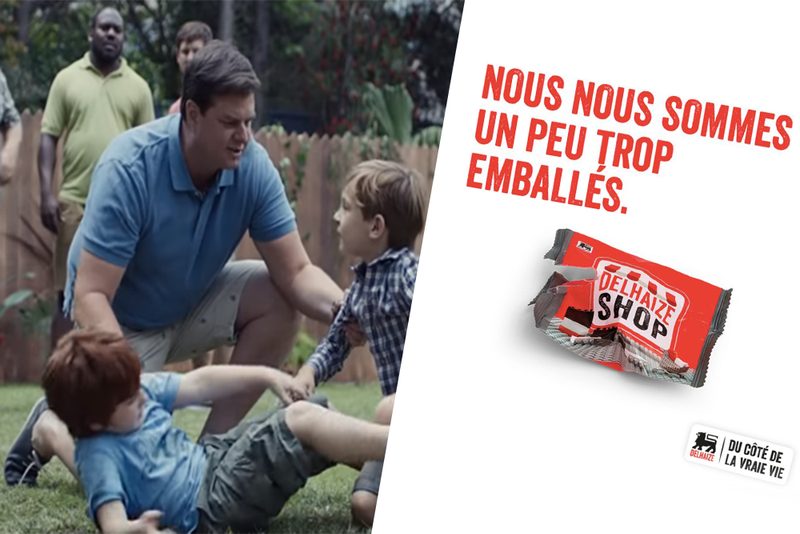
Lessons from digital crises in 2019
The Saper Vedere study on digital crises that I publish every year is now online. A chance to go back over this year's 7 important lessons.
Read on ReputatioLab →
Statistics, trends and lessons: all about the bad buzz of 2014!
Here we are: the end point of a year of work. And this one was no walk in the park, as the number of cases has increased. So I had to process no fewer than 104 cases statistically, and above all write up and analyse them.
Read on ReputatioLab →
The 6 lessons from the bad buzz / 2.0 crises of 2013
The qualitative part for the 2013 crises is now finished. (See the 56 crises in detail here.) It is now time to move on to the quantitative analysis. What are this year's lessons? 1. The confirmation of communication crises.
Read on ReputatioLab →The mechanics of propagation

How did the bedbug controversy spread?
The emergence and rapid spread of the bedbug controversy on social media offer a fascinating case study of the influence of these platforms on the spread of information and public debate.
Read on ReputatioLab →
Ramadan & Evian: Twitter's new socio-technical mechanisms influence how crises spread
The day before yesterday, Evian posted a tweet at a bad moment, as it was the first day of Ramadan. I wanted to look into the case because there were questions, but above all because there are fine lessons about the use of platforms and what they change about how crises spread.
Read on ReputatioLab →
Analysis of how coronavirus spread on social media
It had been a long time since I had looked into the spread of a crisis. Coronavirus was the perfect opportunity to do so, and to capture the reactions of digital crowds to the arrival of a virus and how they took it on. Analysis carried out using Brandwatch software and data. From abroad to humorous comments by way of the media.
Read on ReputatioLab →
How did the Disneyland Paris crowd surge spread across digital spaces?
For years, I have been fascinated by how crowd movements spread across digital spaces.
Read on ReputatioLab →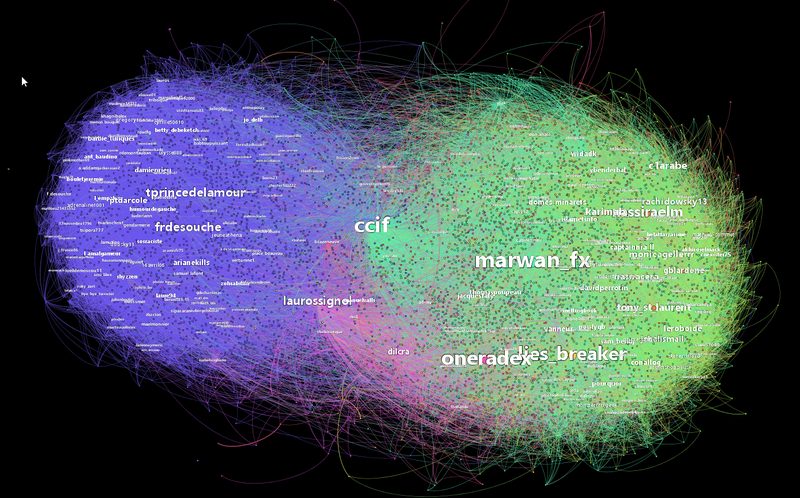
How did the burkini controversy spread on social media?
It was the controversy of the summer: the burkini, a special tunic for people of Muslim faith that covers the hair in the manner of the hijab, took over the entire media space. How did the controversy arise? Who spread it? Cui bono? Analysis using Visibrain Focus TM.
Read on ReputatioLab →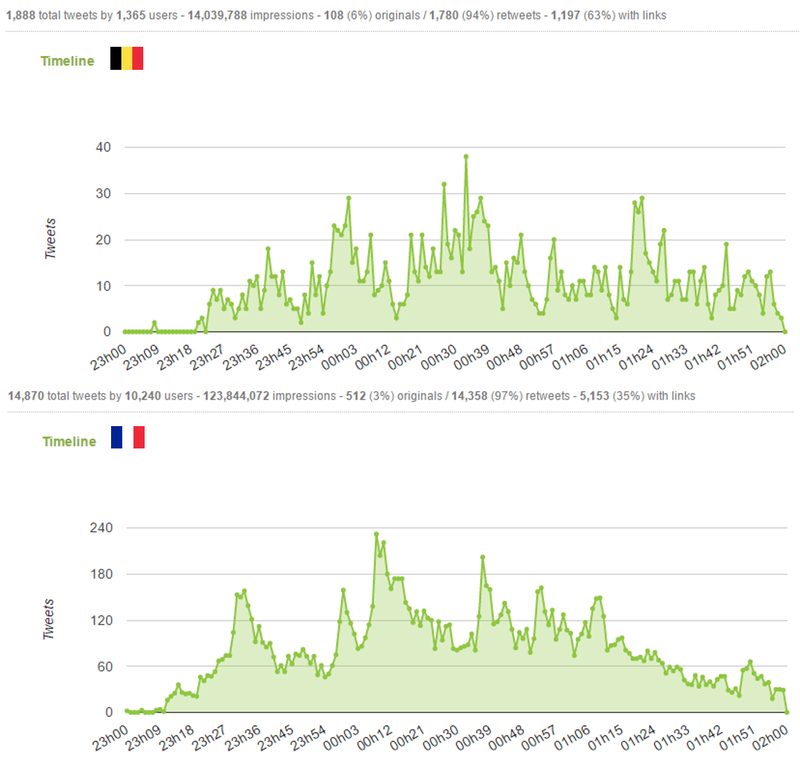
How attacks spread among journalists and media. A comparative analysis between France and Belgium.
As you know, I have access to two panels of French and French-speaking Belgian journalists and media. So a chance to compare practices and uses between the two countries and above all to see how journalists in a foreign country cover an event taking place late and far away. I.
Read on ReputatioLab →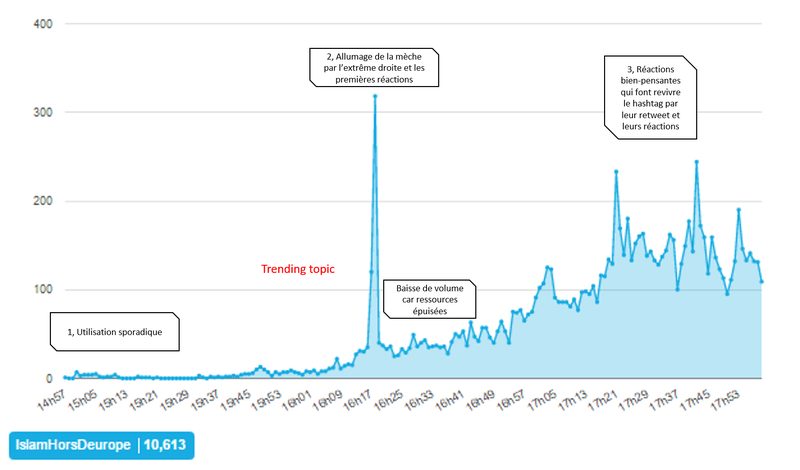
The mechanics of hate hashtags. The case of #IslamHorsDeurope
JesuisKouachi, IslamHorsDeurope, ABasLesHomosexuels, all these hate hashtags have had their moment of glory on social media. They appear especially right after an attack because it is very easy for the far right to make them happen.
Read on ReputatioLab →
What impact does a communication artefact have? The case of #JeNeSupportePasLesBleus
This Tuesday, the agency Buzzman launched a communication artefact with the help of Raymond Domenech to raise awareness of domestic violence.
Read on ReputatioLab →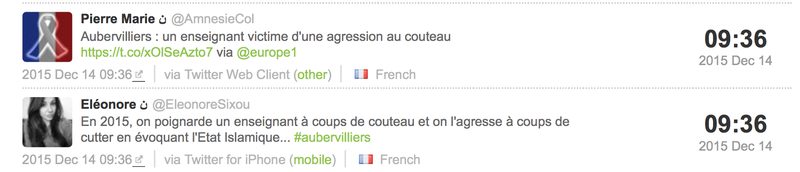
The mechanism of the media storm hijacked on Twitter. The Aubervilliers case
On Monday, a primary school teacher in Aubervilliers mutilated himself to make people believe in an attack by the Islamic State. A media storm followed, given the prevailing climate, in which the far right once again did not miss the chance to spew out its philosophy. How did this hijacking and media deluge unfold on Twitter?
Read on ReputatioLab →
#Thalys attack: Twitter had the information 1 hour before the media
Yesterday, we came very close to a real bloodbath on a Thalys train. This crisis situation is interesting to me in many respects (crisis, communication, terrorism, media, France and Belgium). That was all it took for me to analyse it using Visibrain Focus TM. I.
Read on ReputatioLab →
When noise becomes an instrument of influence. The #TelAvivSurSeine case
Controversy is brewing following the organisation of a 24-hour party where Paris Plages will take on the air of Tel Aviv, as part of a partnership between the city of Paris and the Israeli city.
Read on ReputatioLab →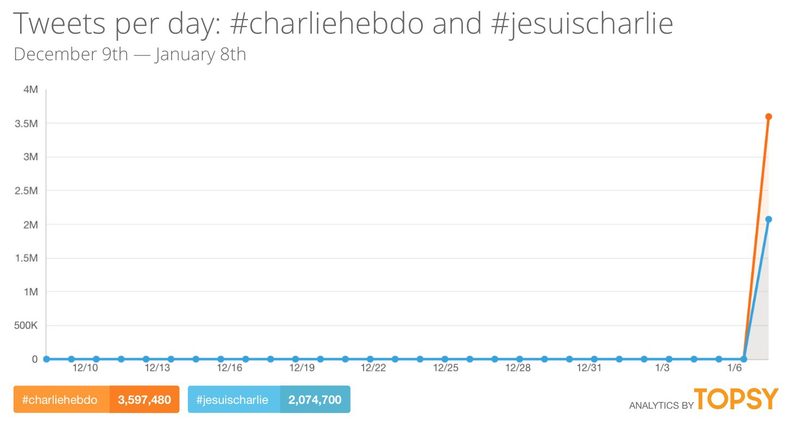
Analysis of #jesuischarlie on social media (updated)
For more than 30 hours, nobody has been talking about anything else: the murders at the Charlie Hebdo headquarters.
Read on ReputatioLab →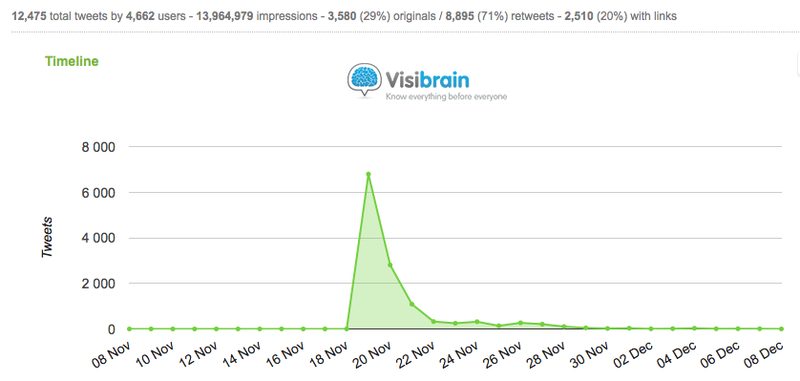
The recipe for buzz? One theme, different subjects. The #payetonuterus case
More than 2 weeks ago, a phenomenon was born on Twitter: the hashtag #payetonuterus, in which women complain about the prevailing sexism of their gynaecologists. This hashtag did the rounds of the media, from L'Express to Le Monde, France TV, Europe 1 and others. Even in Belgium, some outlets covered it.
Read on ReputatioLab →
What #jesuisparisienne teaches us about how bad buzz spreads
I have no intention of writing yet another article retracing the, all in all, ordinary story that happened to Le Parisien. Others did so well before me and developed the basic but important analyses, from the Streisand effect to web justice and ways of bouncing back.
Read on ReputatioLab →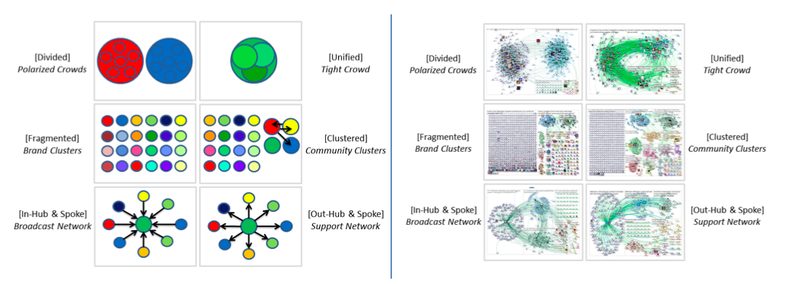
The typology of conversations and its implications for bad buzz
It had been a while since I had written a theoretical article, but an American study by the Pew Research Center came out in February and backs up, with facts and evidence, certain things I had observed but had found hard to prove.
Read on ReputatioLab →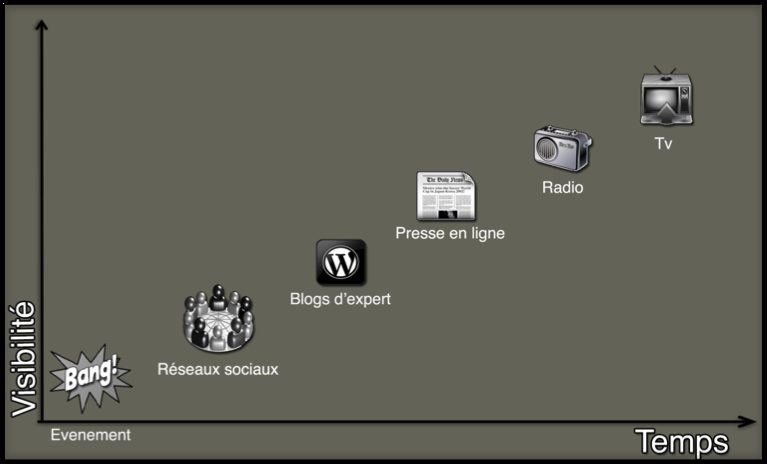
How does the 2.0 crisis spread?
This is a follow-up to the article: http://gestionereputation.over-blog.com/comment-d%C3%A9marre-une-crise-2.0 (if you do not understand the suns, leaves and so on, it is explained there and this typology comes from Emmanuel Bloch). So let us return to the diagram of how the crisis spreads.
Read on ReputatioLab →Brand and media cases

Ban on selling champagne at the Strasbourg Christmas market: a local controversy that became national through the far-right online sphere
Champagne, a drink intimately associated with end-of-year celebrations in the minds of millions of French people, found itself, despite itself, at the heart of a controversy during the week of 10 October.
Read on ReputatioLab →
The Décathlon hijab controversy: the bystander as a communication weapon on social media
It was the controversy of the week: the Décathlon hijab and its political exploitation enjoyed heightened visibility with no fewer than 500,000 tweets in a few days. How did it spread? What was the crisis communication, and is Décathlon really in crisis? So many questions that I tried to answer!
Read on ReputatioLab →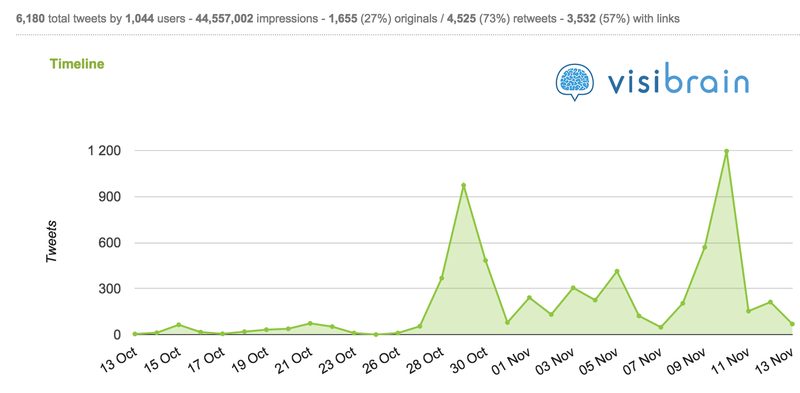
#Galantgate: from scandal to oblivion thanks to the attacks
It has now been 2 months since the Transport Minister, Jacqueline Galant, was in the hot seat. While it seemed almost certain that she would resign, she got out without a scratch.
Read on ReputatioLab →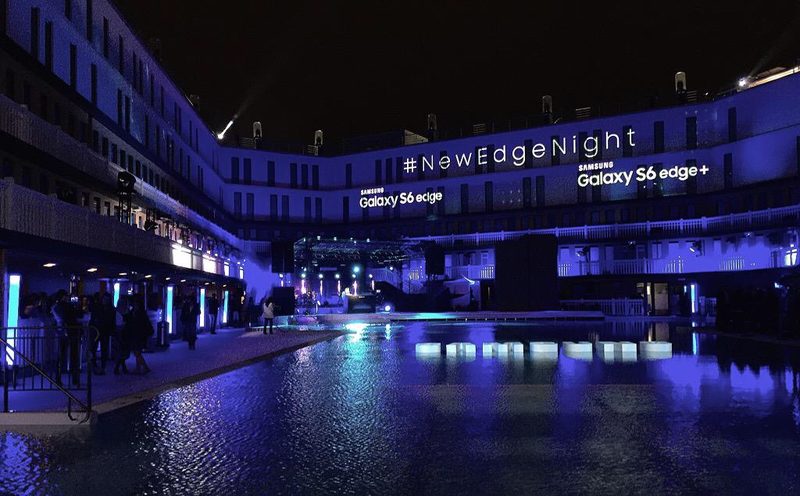
#NewEdgeNight: Samsung invents the marketing wind turbine, or the art of creating hot air
On 15 September, Samsung organised a gigantic event under the hashtag NewEdgeNight. On the programme: many celebrities and social media influencers around the famous Molitor swimming pool. Sponsored tweets, an inbred Parisian climate, a cardboard-cutout atmosphere in which you feel obliged to tweet “great atmosphere”
Read on ReputatioLab →
Analysis of the Fleury Michon fiasco and its #PouletQuiTweete
Fleury Michon came up with the idea of the summer: making a chicken fillet tweet for two weeks. This utterly daft idea, probably born in an over-lubricated brainstorming session, inevitably got the vegan community and a few communicators/commentators reacting. Yet it is nothing like a bad buzz. Analysis. II. Analysis 1.
Read on ReputatioLab →
How does a bad buzz happen on Facebook? The Zara case
Cases where a customer's complaints snowball on Facebook are extremely rare. Yet from time to time they happen and get talked about in the press. The mechanics are always the same and I will explain them through various cases, including Zara's. I.
Read on ReputatioLab →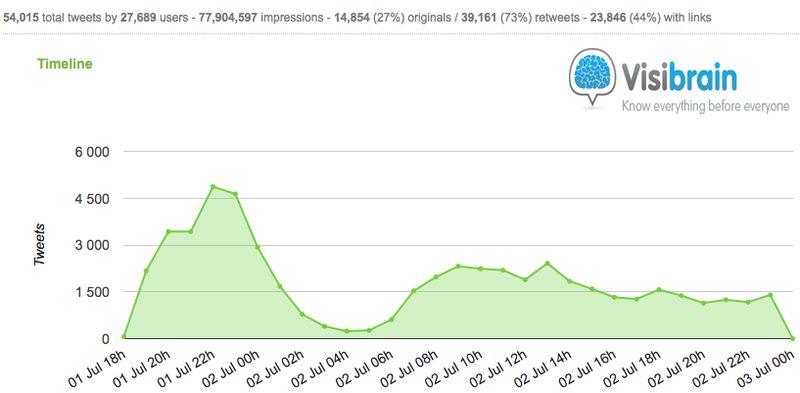
End of Les Guignols: analysis of #touchepasauxguignols
After 28 years of existence, the flagship programme of political satire is in danger. The announcement of its possible disappearance hit social media like a bomb, with an intensity not seen since the affair of the SNCF trains that were too wide.
Read on ReputatioLab →
#Fifagate / #BelgoControl: denying crisis status in crisis communication.
On 27 May, we witnessed two major crises. First, in Switzerland, FIFA executives were arrested by the FBI for corruption and fraud, while in Belgium we suffered a power failure in Belgocontrol's system, which grounded all flights for several hours.
Read on ReputatioLab →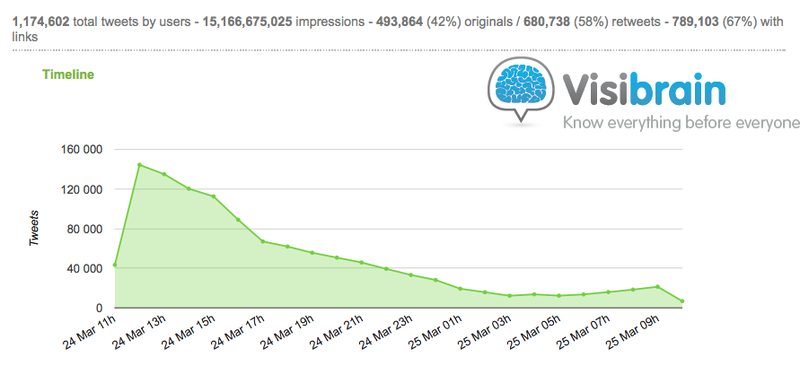
Analysis of the crisis communication and conversations around the #Germanwings crash
Around 11 am, a Germanwings aircraft crashed in the south of France. Tragedy is becoming more and more familiar to television viewers.
Read on ReputatioLab →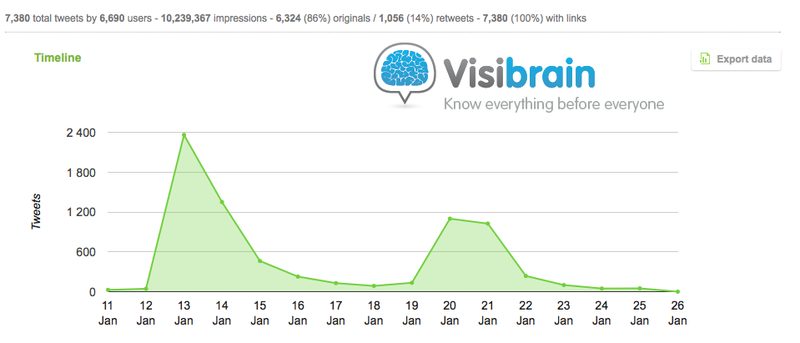
Doritos vs Sum of Us: bad buzz does not always win.
Every year, for the Super Bowl, the Doritos brand, owned by PepsiCo, launches its #crashthesuperbowl video competition. The concept? Internet users have to come up with an advert, and the winning one is broadcast during the Super Bowl.
Read on ReputatioLab →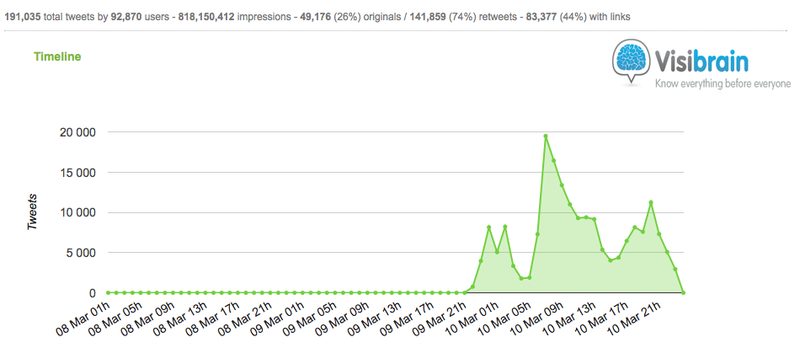
Analysis of the TF1 / #Dropped crisis on social media
Last week, the television channel TF1 suffered a crisis with major repercussions: two helicopters belonging to one of its production companies, ALP, crashed, and with them, well-known faces much loved by the French public.
Read on ReputatioLab →
Shredpad, Mikado Stick, Monopoly: how to spot a fake bad buzz?
Two and a half years ago, for my dissertation, I theorised the fake bad buzz. At the time I was seen as eccentric, because there had never been a case before. Now, between Stromae, Monopoly, Carambar and others, the practice seems more than familiar.
Read on ReputatioLab →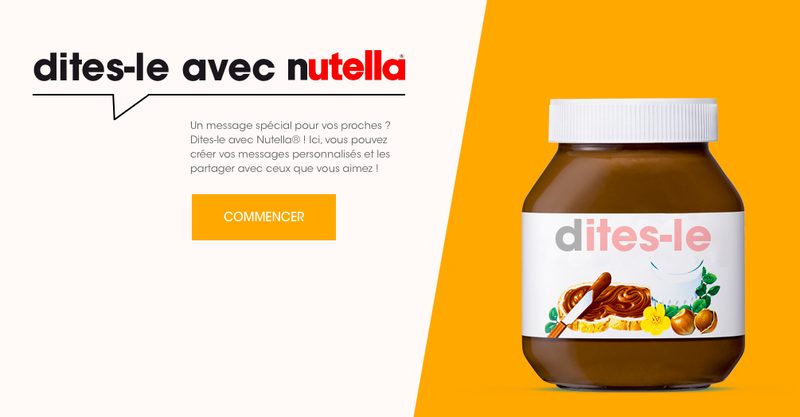
#Nutella: bored on a Tuesday? Say it with a bad buzz!
The editorial buzz machine has kicked in, and the Huffington Post, Franceinfo and Rue89 have made a meal of it.
Read on ReputatioLab →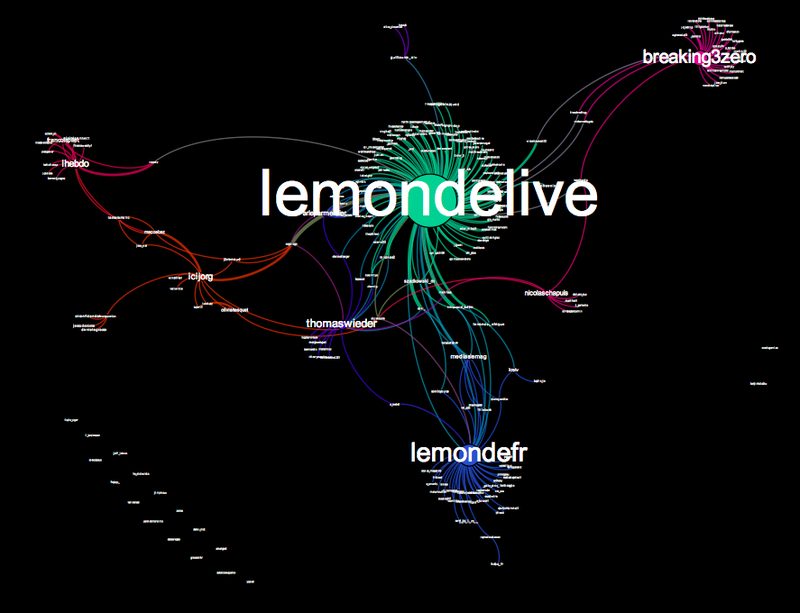
Analysis of #Swissleaks on social media
On 7 February, the Swissleaks scandal made headlines and set social media alight. The perfect opportunity to analyse a media crisis and its reception by public opinion using Twitter and the Visibrain monitoring software. I.
Read on ReputatioLab →
#SwissLeaks: Gad Elmaleh and LCL, the tough problem of brand ambassadors
While the whole world counts the money that escaped the taxman and tries to work out which public figures are in the frame, the French are talking about just one thing: Gad Elmaleh and LCL.
Read on ReputatioLab →
#BadBuzz Tefal: who profits from the commercialisation of bad buzz?
Last week, Tefal suffered a bad buzz because of a mistake by its communications agency Publicis. However, the reactions were not as unanimous and massive as they appear.
Read on ReputatioLab →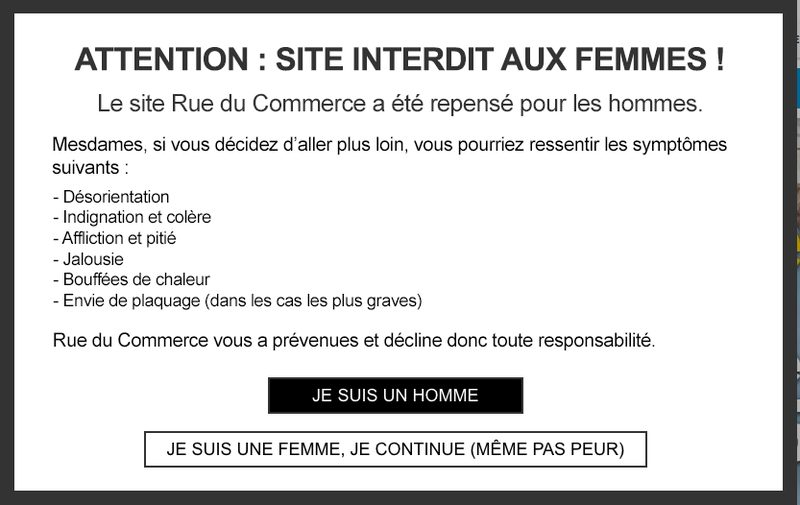
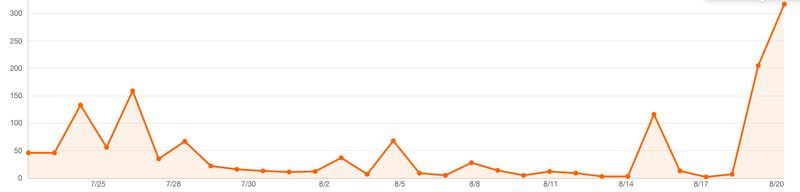
Analysis of the Société Générale & CiC bad buzz
We had already come across the NGO Baraka City in earlier articles here and here, in connection with a guerrilla attack on the company M6 because it had filmed the programme Pékin Express in a country where genocides are taking place. Here we meet them again in a more difficult situation in which they do not really have the upper hand.
Read on ReputatioLab →
Tati advert with Little Mix: not everything is necessarily a bad buzz
This morning, while I was taking a quick break on Twitter between two Excel columns, I came across a comment from a community manager saying they were going through a bad buzz. Intrigued by this alert, especially as I had not seen any other weak signals from a brand.
Read on ReputatioLab →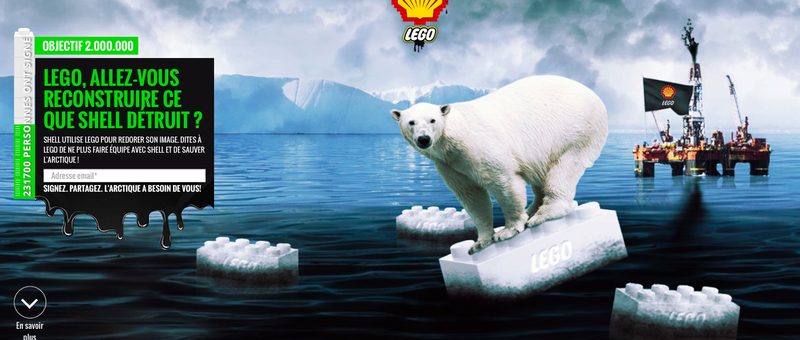
Analysis of the Lego crisis (#BlockShell)
It is the communicator's absolute nightmare: a crisis triggered by an NGO that puts all its weight, legitimacy and network against you, sounding the bugle of Cyberwar.
Read on ReputatioLab →
Analysis of the Primark crisis (#labelgate)
The case had caught my eye from the start, but I thought I would not be able to treat it in a detailed analysis. A week later, I realise that this case is wonderful in many respects. A look back at the case. I. Introduction The story is wonderful.
Read on ReputatioLab →
Analysis of the TER crisis (and bad buzz)
The affair is making a lot of noise in all the media: SNCF and RFF ordered 2,000 new train sets that are said to be too wide for certain platforms.
Read on ReputatioLab →
M6 Bad Buzz: the fable of the lion and the tortoise.
It could have been a fable by La Fontaine: the story of a lion sovereign of an island, to whom a tortoise appeals for help from the sea. She wants his protection against the snake that rampages across the island so that she can lay her eggs there.
Read on ReputatioLab →
Analysis of the Pékin Express bad buzz
If you have been reading me for a long time, you know that I particularly enjoy cases of NGOs that use social media to fight for a cause.
Read on ReputatioLab →
How can a brand create its own (fake) bad buzz?
In a previous article, “Crisis 2.0: danger or opportunity?”, I discussed the case of the spontaneous crisis. This observation starts from the premise that it is increasingly difficult to create positive “buzz”. Consequently, over the course of this year we saw more and more brands using this strategy.
Read on ReputatioLab →
Abercrombie: this is not a bad buzz.
The news broke on 16 August 2012: A&F's net profit was halved in the second quarter of 2012, along with other alarming figures.
Read on ReputatioLab →Understand and prepare
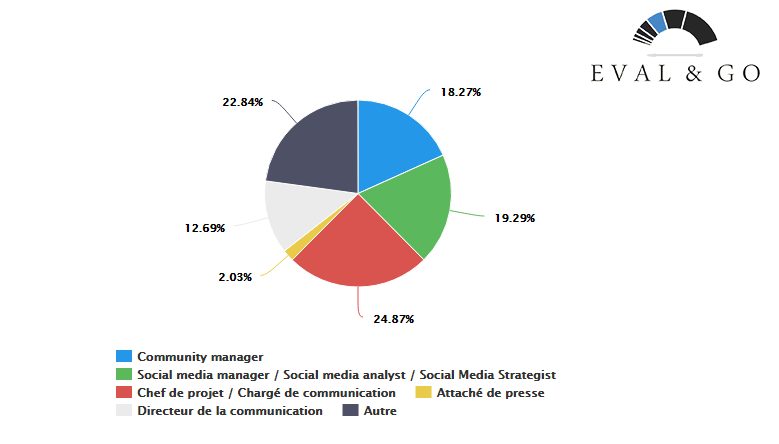
Major survey: communicators and bad buzz
After 3 months of gestation, it is high time I shared the preliminary results of my survey on bad buzz carried out via Eval & Go.
Read on ReputatioLab →
Very Bad Buzz
The official summary The fear of a bad buzz on the web is not the preserve of large groups.
Read on ReputatioLab →
In Praise of Controversy (L'apologie de la polémique) – Ruth Amossy
The summary What do the debates on the status of women, or on bonuses in times of crisis, teach us? Through such cases, this book shows that the much-maligned public controversy plays a vital role in our pluralist democracies.
Read on ReputatioLab →
Bad buzz and employer brand #HR: history, origins and ways to improve
Employees are the essence of the engine called the organisation. Without them, nothing would be possible. One strand of reputation theorists credits them with spreading it. Managers need them to convey the identity and culture of the company. The more these are shared, the more effective interactions with the various stakeholders would be.
Read on ReputatioLab →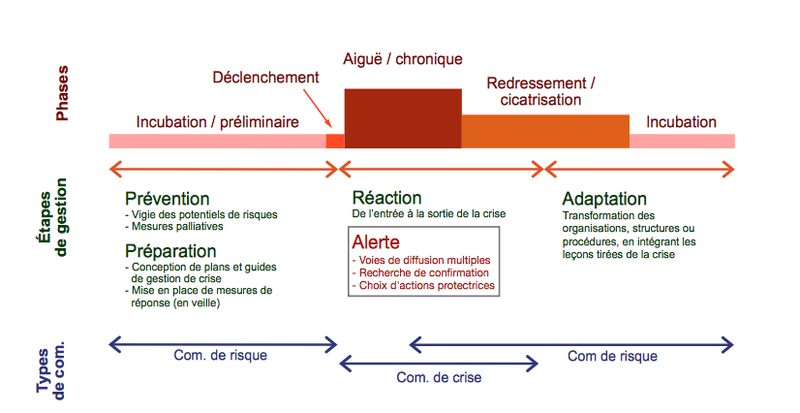
Where do we stand on the use of social media in emergency management (#MSGU)?
Attacks, bad weather, earthquakes, industrial accidents: more and more, we use Twitter during these disasters. The public authorities have understood this well and are putting in place more and more systems to capture the information spread on Twitter, but also to inform citizens in real time.
Read on ReputatioLab →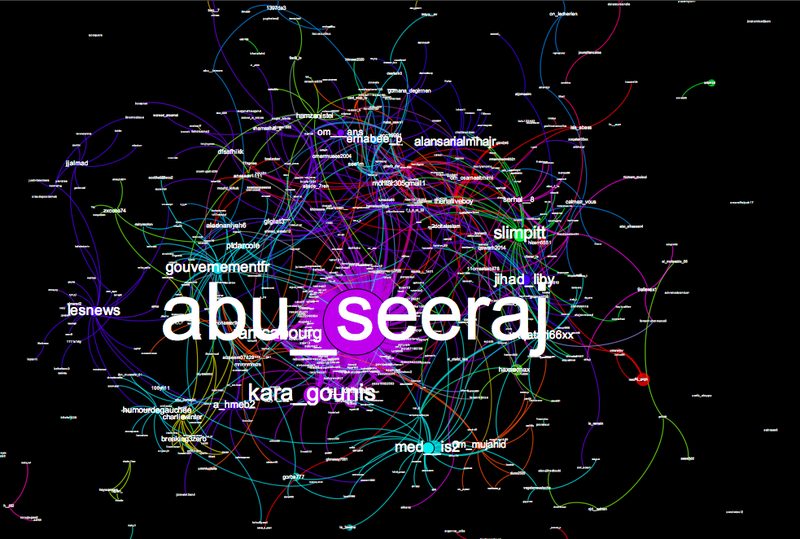
Using a promotional hashtag: a reputational risk?
This weekend, the Islamic State hijacked the French government's campaign by using its hashtag #StopDjihadisme. On it, Daesh posted numerous images of the beheading of the Japanese hostage. This practice is not new and the rise in hashtag hijackings raises questions that I will try to answer through a historical overview. I.
Read on ReputatioLab →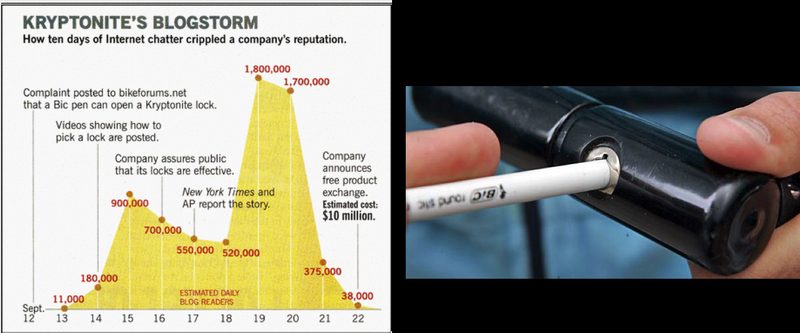
The 5 senses to develop in the event of a bad buzz
10 years ago, the first bad buzz took place. An internet user tries to contact a company to tell it that its product, a padlock, can be opened with a simple Bic pen. With no reply, the internet user posts a video on a blog.
Read on ReputatioLab →
The challenge of internal communications during a bad buzz
Much has been said about the challenge of listening on social media (monitoring, setting up dialogue mechanisms, alerts and so on), the challenge of reacting (speed, empathy, solving the problem and so on), and the challenge of healing.
Read on ReputatioLab →
Strategic monitoring: the anti-bad-buzz vaccine?
It started with a simple tweet from me, following yet another article on monitoring that said it was the weapon for avoiding a bad buzz.
Read on ReputatioLab →
2.0 crisis / Bad buzz: danger or opportunity?
We have looked at the different periods of 2.0 crises or bad buzz from 2004 to 2013. The aim now is to find out what lies ahead for companies in 2013-2014. So I tried to look for the weak signals that can guide us on the best way to handle the crises coming next.
Read on ReputatioLab →
What if the future of bad buzz were community-based?
At the end of August, usually fairly quiet for 2.0 crises, there were two new cases, one of which will ultimately not make it into the records of 2.0 crises. Polydor France The first was pointed out to me by @Olivtune, whom I thank.
Read on ReputatioLab →
Where the wise man points at the crisis, the fool looks at the bad buzz
A case has recently come up that is, for me, the perfect case, one that lets me explain a great many things and preface all the coming Monday theory articles on crisis.
Read on ReputatioLab →