



 ReputatioLab, Saper Vedere's laboratory for crises and reputation · File updated on 13 September 2026 · reputatiolab.com →


Publication rhythm
What twelve years of analysis teach us
- Social media counters do not tell you who is winning. Nicolas Sarkozy led almost every indicator of the right-wing primary and did not reach the second round. These figures measure mobilisation, not a ballot. What the social web says about the right-wing primary
- You do not suffer your bubble, you enter it. The mapping of ten million tweets from the presidential election shows camps closed in on their own sources, with no algorithmic feed imposing it. Are there information bubbles?
- A mobilised minority looks like a majority. During the speech by François Hollande and Angela Merkel at the European Parliament, one camp hogged every ranking while its community remained a minority in the graph. The FN organises on Twitter
- A rumour does not need volume. Ten thousand three hundred and twenty-seven tweets from the patriosphère were enough for a candidate to respond publicly to a rumour never mentioned before. From the patriosphère to the media
- Interference is measured, not assumed. Russia Today reached 145,017 different people during the campaign, but the core that interacts more than once with Russian media remains under fifteen thousand individuals. What Russian influence on the campaign?
- Social networks have become networks of loyalty. The assessment of the municipal elections says it plainly: they sustain the convinced and feed the ground campaign, they no longer conquer. Is Sarah Knafo favoured by the algorithms?
Social media indicators do not tell you who is winning
This is the common thread running through twelve years of measurement, and it was always written before the results, never after. Before each election, ReputatioLab published the ranking of candidates on social media indicators alone: engagement, shares, followers, views, size of communities during the debates. The exercise was meant to avoid post-match analysis. Above all, it established that these rankings predict nothing.
The social web is not a good indicator of a candidate's strength at the ballot box.
ReputatioLab, What the social web says about the right-wing primary, 2016The counter-example that served as a demonstration
The analysis of the Facebook audiences of the two finalists of the right-wing primary gives the most telling figure of the series. Facebook estimated the number of people interested in Alain Juppé at 280,000, against 160,000 for François Fillon. It was Fillon who won, by a wide margin.
The Twitter corpora come from Visibrain, supplemented by Brandwatch, Talkwalker and Radarly, and by SoPrism to read audiences as Facebook sees them. Amendments and interest-group statements are tracked with Follaw.SV. The maps are built in Gephi: each point is an account, each link a mention, a share or a follow.
Bubbles we knowingly jump into
Public debate readily attributes information bubbles to algorithms. These analyses say something else. The mapping of more than ten million tweets from the presidential election, then of half a million tweets taken over one week to look at the domains shared rather than the accounts, arrives at the same picture: each camp gets its information in its own lane.
Yes, we do have information bubbles. And no, it is not an algorithm that sets them for us. We jump into them knowingly.
ReputatioLab, Are there information bubbles?, 2017The major media are cited by everyone: what distinguishes the lanes is what gets added to them.
| Activist community | The three most shared domains |
|---|---|
| Marine Le Pen | Boulevard Voltaire, FrDeSouche, Le Figaro |
| François Fillon | Le Figaro, Valeurs Actuelles, L’Opinion |
| Emmanuel Macron | Le Figaro, Le Monde, Libération |
| Jean-Luc Mélenchon | Le Monde, L’Huffington Post, FranceTvInfo |
| Benoît Hamon | Libération, Canal +, Le Monde |
The asymmetry is clearly named: the bubble formed by the Fillon and Le Pen communities is the one that departs furthest from the traditional media and relays sites described as conspiracist. The PenelopeGate case confirms it, with a single fact producing five readings. It is not a matter of choice of newspaper but of framing: on the far right, information is not merely decoded differently, it is put in context by other information and other frames of thought.
A debate moves nobody
The oldest demonstration in the file concerns Nicolas Sarkozy's return to a television studio. By dividing the evening into four moments, the mapping shows communities growing without ever mixing. The same exercise on François Hollande's address to the French produces two separate blocs. In both cases, once the programme is over, the conversations stop dead.
So in reality we have communities that talk among themselves but do not engage in dialogue.
ReputatioLab, Political discussions on Twitter: the Sarkozy case, 2014The noise factory: minorities, fake accounts, rumours
If social media do not shift convictions, they manufacture an appearance. This is the best-documented part of the file, and the most constant from one election to the next: occupying the rankings to create an impression of a majority.
The case of the presidential campaign's botting is the clearest. Spotted because an ordinary political tweet was gathering more than twelve hundred shares, the account was only a facade: bought followers, bought retweets, and a fleet of secondary accounts posting at the same second from a single dashboard. The aim was not to convince, but to appear in the hashtag trends and word clouds that quantitative studies pick up.
This should give journalists particular pause, and tell them not to be taken in by consulting only quantitative rankings.
ReputatioLab, The FN organises on Twitter, 2015The mechanics of a rumour, in five steps
The file contains two complete reconstructions: the false Saudi funding affair, built on a mirror site of a major Belgian daily, and the Paris rumour about a candidate's private life. Both follow the same trajectory.
- Identify a weakness. A young party has not yet compartmentalised its networks, and its only grey area is its funding. That is the one chosen, because it feeds every imaginable conspiracy.
- Build a credible vehicle. A mirror site resembling that of a well-known title is enough, with confusion between the two addresses doing the rest.
- Target the most emotional. The first recipients are the opponents of the targeted candidate. This is the reactive paradox: the community that wants to punish the sender ends up promoting it.
- Wait for the network bridge. Two weeks go by with no effect, then an elected official picks up the link and mentions of the Belgian daily soar.
- Accept the final asymmetry. The hoax is spread by one camp, the rebuttal only by the press. The two do not circulate in the same networks.
So it took only 10,327 tweets from the patriosphère to get a candidate talking about a rumour that had been circulating for a long time but never mentioned until then.
ReputatioLab, From the patriosphère to the media, 2017It remains to establish who is spreading it. The investigation into nine entirely false rumours of the presidential campaign isolates some eight hundred accounts, which piled up a million tweets in two months. Cross-referencing with the most active accounts around the two Russian state media is unambiguous: a 75% match for those that relayed at least three rumours, and up to 92% for those that relayed five. The word most used by these accounts is not the name of their candidate, but that of their target.
Foreign interference, measured rather than feared
The file holds a consistent and uncomfortable position here: documenting operations without overstating their reach. The analysis of Russian propaganda clearly distinguishes the two outlets. Sputnik barely covers the French campaign. Russia Today makes it its editorial line and reaches 145,017 different people through shares alone.
The third figure is the one that matters. This broad audience is a transient flow: at two interactions, only 14,792 individuals remain, and ten interactions bring the core down to 6,006 profiles, spread across only three communities. The share of pseudonymous accounts there exceeds 90%.
The file also documents an operation that did not come from Russia: on the false Saudi funding affair, examination of the three initial accounts tips the hypothesis towards Iran, with Russian media themselves being targeted by those accounts.
So I believe very little in informational interference that would have an impact. There will be some, that is certain. But that it will have an impact, I very much doubt.
ReputatioLab, The key issues of the presidential election, 2026The position held today rests on a quantified precedent: the Russian network Storm-1516 identified by Viginum created one hundred and forty fake sites, for impacts that Viginum itself describes as almost nil. The analysis also recalls that the MacronLeaks largely fizzled out. What has changed, however, is the method: rather than building audiences for relay accounts, operators go where the audience already is, that is, in the comments.
From conquest to loyalty: what 2027 changes
The file ends on a reversal. The analysis of the municipal elections concludes that elections no longer take place on social media, if indeed there was ever a real battle in those spaces.
They have become networks of loyalty, not networks of conquest.
ReputatioLab, Is Sarah Knafo favoured by the algorithms?, 2026The case against algorithms, and what measurement says about it
One study argued that a candidate benefited on X from an exposure far greater than her organic audience, by comparing her views with those of a competitor with a comparable number of followers. The debunk does not dispute the figures, it disputes the cause.
The explanations put forward are editorial. One ran a campaign designed for social media, while the others broadcast reruns of programmes or extracts of rallies, and the same gap is found on the other networks, which rules out the hypothesis of a platform-specific setting. Follower numbers do not predict performance: a recent audience engages, while an older audience, part of which has left the network, no longer moves.
The warning applies to any reading of a dashboard: the reach indicators displayed by monitoring platforms are entirely artificial, since they multiply the number of posts by the number of followers. They are not real views. Comparing two players on that basis is comparing two estimates, not two audiences.
What, on the other hand, will carry weight
The analysis of the coming campaign shifts the centre of gravity towards four areas. First, a fragmented media landscape: a right-wing ecosystem structured around a news channel, content creators large enough to offer editorial targeting by voter segment, and private messaging apps that will have to be fed. The single-strategist model is described there as finished.
Then there is door-to-door canvassing, which has become central again because the technological barrier has fallen. The analysis cites the founding comparison: one vote won for fourteen face-to-face conversations, against one for thirty-eight personalised phone calls, against one for a hundred thousand leaflets distributed.
Then there is funding, a terrain that social media do not show. While corporate donations are banned and individual donations capped at €4,600, a campaign can be launched on very few donors: in 2017, 913 of them, 1.2% of the total, accounted for 48% of the funds raised. Add to that the state of the parties' finances, which are incomparable from one camp to the other, from thirty-three million in assets for the Parti socialiste to a negative balance of eleven million for the Rassemblement national.
Finally, the data itself, whose abundance is presented as a risk as much as an asset.
For an election, data is a thermometer. An excellent thermometer, provided you know what you want to measure and use it for tracking, not for steering.
ReputatioLab, The key issues of the presidential election, 2026What this changes for an organisation
These analyses were written for campaigns, but they describe mechanics that any exposed organisation will recognise. Four practical consequences emerge.
Monitor communities, not rankings
A hashtag ranking, a word cloud or a league table of accounts can be manufactured, and a minority but coordinated community occupies them with ease. Network analysis puts share of voice back in its real place: this is why these studies always pair quantitative measurement with a mapping. Monitoring that looks only at volumes will be caught out.
Prepare, because the window for reaction is short
The mirror-site case contains the most concrete countermeasure in the file, and it costs nothing: the targeted daily newspaper could have spotted the fraudulent address two weeks before things ran away, by monitoring the shares that cite it without pointing to its own domain. On the party side, the finding from the following campaign is of the same kind: of the 268 MPs in the majority group, only 55 had mobilised on the day the bill was presented, with no rapid-response unit, leaving the field clear for the opposition. Multi-network analysis
Responding without giving power to those who have none
Two articles converge. On the programme cancelled in autumn 2015, the manoeuvres of the two major parties to control their opponent's appearance produced the opposite of the intended effect, a perfect Streisand effect. The study of the regional elections states the rule in one sentence.
In crisis management, it is said that you should not give power to those who have none.
ReputatioLab, The regional elections: the FN flees Twitter in the second round, 2015The corollary applies to any organisation tempted to answer noise with noise.
The astroturfing logic is therefore pointless. You create noise for nothing. You influence nothing.
ReputatioLab, Political discussions on Twitter: the Sarkozy case, 2014Choosing the right channel for the right interlocutor
The reconstruction of the accounts followed by ministers shows a highly political and highly media-oriented ecosystem, with a strong local anchoring and three families of interest groups: agricultural, local economic and societal. Entire sectors, health, automotive, aviation and energy, are absent, and advocacy lodged on a network that ministers do not use is lost. Analysis of ministerial ecosystems The influence measurement carried out on the following government reaches the same diagnosis: an institutional executive that is largely offline. Analysis of the Lecornu government
The other route is parliamentary. An examination of the amendments co-signed after the dissolution reveals stable cross-party pairings on technical subjects: health, local taxation, environment, local authorities. It also reveals an asymmetry, with many socialist amendments co-signed by Les Républicains MPs without the reverse being observed. For anyone seeking to get a subject taken up, this is a far more precise entry map than a count of mentions. Analysis of parliamentary consensus
The analyses behind this file
Each lesson in this file points to one of these articles, published by ReputatioLab. They are sorted by sub-theme, from most recent to oldest.
Towards the 2027 presidential election: today's political scene

2027 Presidential Election: the 7 key issues
The municipal elections are over. Now we can look ahead to the 2027 presidential election! Conveniently, the funding period for the 2027 presidential election campaign began on 1 April 2026.
Read on ReputatioLab →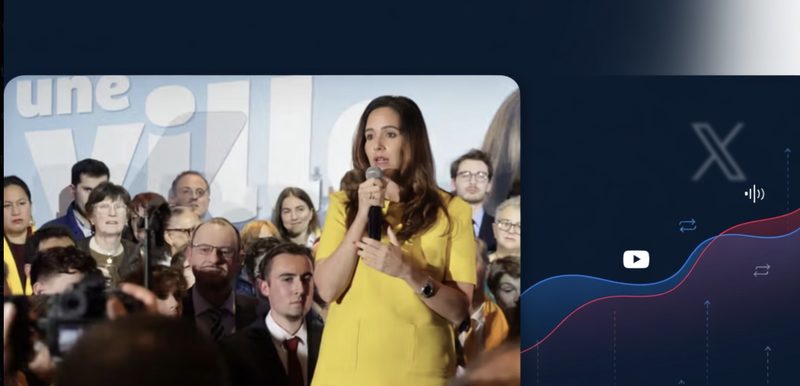
Is Sarah Knafo favoured by X's algorithms?
In February 2026, a study reportedly showed that Sarah Knafo's posts benefited on X from an exposure three times greater than her organic audience should generate.
Read on ReputatioLab →
Macron and his Henry Jullien sunglasses: when an accessory becomes political communication
On the occasion of his speech, Emmanuel Macron created a “for sure” buzz at Davos. Not because of a spat with Donald Trump, but because of sunglasses, a very “relaxed” speech and a future in which he is seen saying “for sure” twice, which was thoroughly hijacked.
Read on ReputatioLab →
How much influence does the Lecornu government have, and how can it be influenced digitally?
The Lecornu II government comes at a time of mistrust and a recomposition of influence relationships. We wanted to play with our new toy, the Social Impact Score, to analyse the various ministers. It makes it possible to objectify this influence by assessing ministers' ability to weigh on European, political, economic and media dynamics.
Read on ReputatioLab →
Lecornu's appointment: the themes that command consensus between the PS and LR
Health was at the centre of Prime Minister Sébastien Lecornu's first official trip, on Saturday 13 September 2025 in Mâcon (Saône-et-Loire). A harmless choice? We were able to identify health as one of the few areas of convergence between the Parti socialiste (PS) and Les Républicains (LR).
Read on ReputatioLab →
Which lobbies are best placed to influence the new government on social media? The case of the 2025 PLF
The drafting of the 2025 Finance Bill (PLF) is already generating intense media activity. And with good reason: many sectors and companies are at risk of being affected. Which of them have a card to play on social media?
Read on ReputatioLab →
No-show tax: has the government been stood up?
The government pulled a “no-show tax” out of its hat, which managed to get the whole health sector worked up. This measure, backed by the Prime Minister, plans to impose a €5 penalty on patients who miss their medical appointment without warning or who cancel less than 24 hours in advance.
Read on ReputatioLab →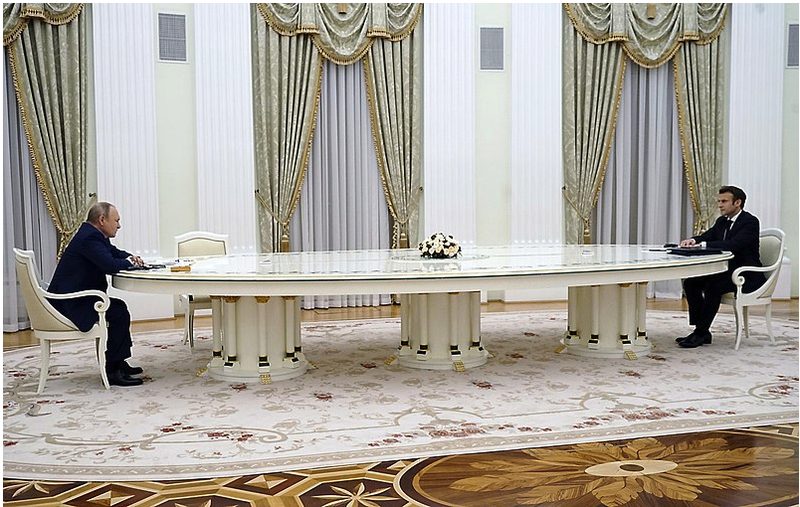
Reshuffle and Macron: does the table communicate?
Macron and tables is a long story of image. We all remember that February 2022 meeting between Vladimir Putin and Emmanuel Macron, in which the Russian president illustrated to the whole world just how distant relations between the two countries were.
Read on ReputatioLab →The 2017 presidential election, seen from social media
#ProjetMacron: multi-network analysis of the announcement of Emmanuel Macron's manifesto
As this campaign was very poor in events, I took the announcement of Emmanuel Macron's manifesto as the basis for analysis in order to see the movements of the various stakeholders. The analysis finds digital under-investment owing to disenchantment with its weight, an absence of an overall strategy and weakly structured rapid-response capability.
Read on ReputatioLab →
What audience do the main candidates capture on Facebook?
The Belgian start-up SoPrism has developed a tool that identifies profiles as Facebook sees them. To do so, it uses information from Facebook Ads to calibrate an audience on the basis of multiple queries. For the presidential candidates, it is thus possible to see those who have an “interest in”
Read on ReputatioLab →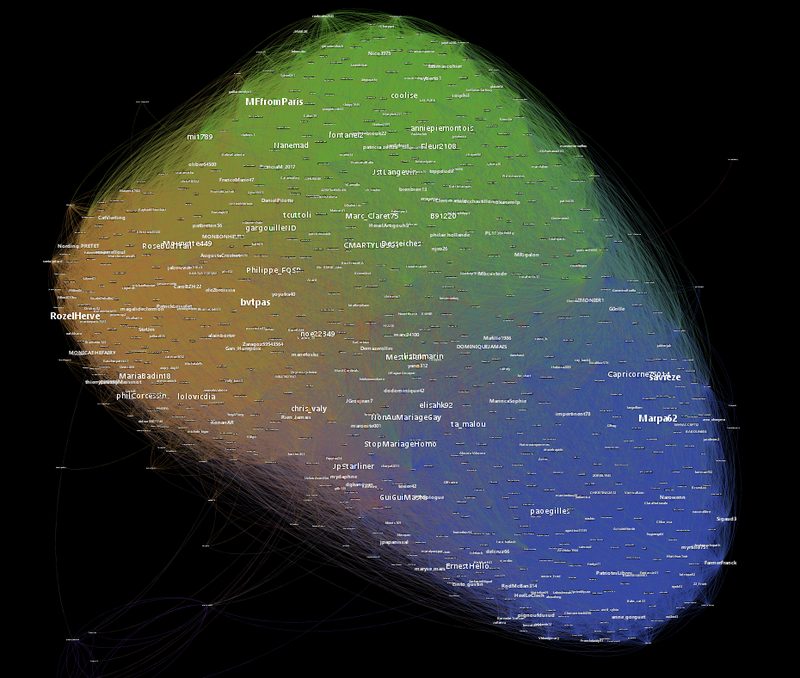
Who spread the main rumours of the French presidential campaign?
Numerous rumours emerged during the presidential campaign. It is therefore worth asking which communities are at work in spreading them. As with my investigations into the rumour of Macron's funding by Saudi Arabia and the one around Cahuzac Macron, it is very difficult to isolate the origin of a rumour.
Read on ReputatioLab →
What is the Russian influence on the French presidential campaign?
Russian influence on elections is addressed by many players, notably on the occasion of Trump's election. People also very often talk about the official media organs of Russian propaganda, Sputnik and Russia Today. In practice, how far does this influence extend? Who spreads this information?
Read on ReputatioLab →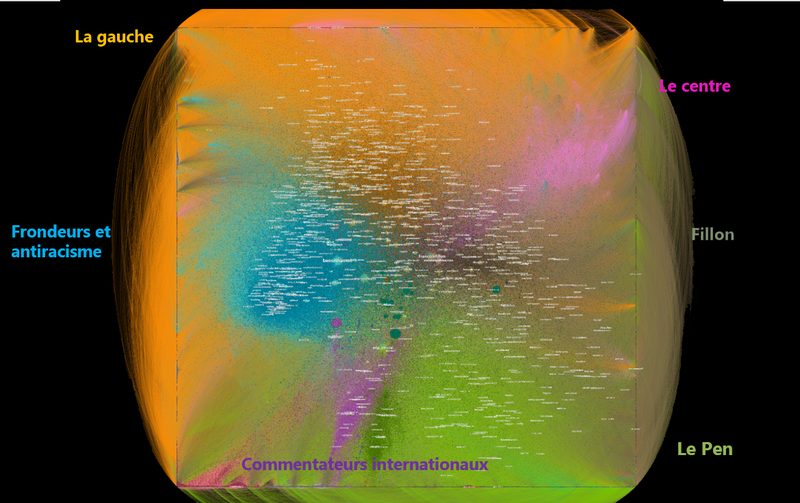
Are there information bubbles in the presidential campaign?
The American elections talked a great deal about information bubbles. Social media would lock us into information communities into which we slip little by little. It was therefore very interesting to do the exercise on Twitter, the social network where, by definition, you can follow anyone, and where there is no timeline algorithm.
Read on ReputatioLab →
If we listen to the indicators from social media, Mélenchon and Le Pen would be in the second round
At each election, I try to deliver the candidates' main social media indicators before the vote. The aim? To avoid any after-the-fact analysis by the social media soothsayers. In an election in which fake polls have emerged here and there (Filteris, can you hear me?), this work seems more than necessary to me.
Read on ReputatioLab →
How a shadowy outfit created 75 accounts to harm Emmanuel Macron
This Saturday, an operation took place using Mediapart blogs to harm Emmanuel Macron. The attempt, which mobilised 75 fake accounts, was fiendishly orchestrated and fortunately did not take hold.
Read on ReputatioLab →
Le Soir plagiarised: was Marion Le Pen taken in by Iranian propaganda?
At the start of March, a wild rumour rang out on the web by means of a plagiarised copy of the site of Le Soir: Macron and Saudi Arabia were supposedly in cahoots. Since then, European experts have reportedly pointed to Russia in this operation. The rumour therefore had to be investigated, which I did using Brandwatch and Visibrain.
Read on ReputatioLab →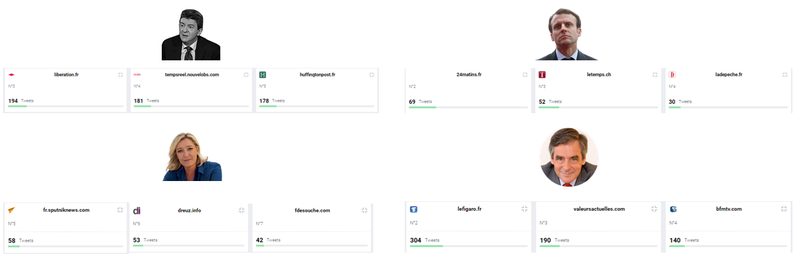
A dive into activists' information bubbles through the #PenelopeGate case
François Fillon's campaign continuity offers a rather fine opportunity to dive into the information bubbles of activists. This article shows that the most committed activists do not consume information homogeneously: the framing, the website and the interpretation are entirely different.
Read on ReputatioLab →
How the Paris rumour about Gallet and Macron moved from the patriosphère to the media
It began with a rumour that was fairly widespread in Paris, to the effect that Macron was gay and in a relationship with Gallet, the head of Radio France. The rumour had been hinted at almost daily by members of the Patriosphère for a long time, and it grew in scale as time went on.
Read on ReputatioLab →
If we listen to social media indicators, Benoit Hamon leads the 1st round
Today sees the first round of the citizens' primary. A chance to take stock of this election on the basis of data gleaned from social media. To do so I combined all the best software (Visibrain, Talkwalker and Brandwatch), and a good part of what it is currently possible to do via social media.
Read on ReputatioLab →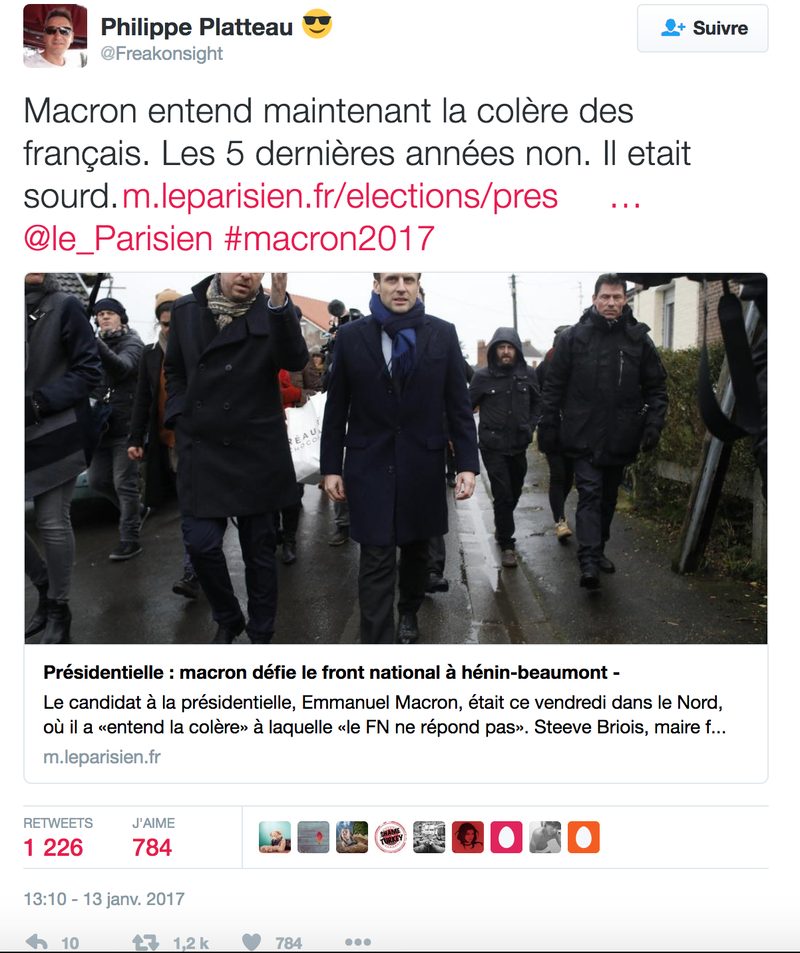
Phil. P., the presidential campaign's first act of astroturfing / botting
It had to happen. I have just unearthed the first genuine use of bots in the French presidential campaign. And it may well have influenced a few quantitative statistical studies based on tweets. Decoding. His name is Phil P., he says he is head of a research unit, and he has been on Twitter for barely 3 months.
Read on ReputatioLab →Primaries, regional elections and debates, 2014 to 2016

The latest social media indicators for the right-wing primary: Fillon far ahead
So that we do not rewrite history, here are the main social media indicators of the right-wing primary over the course of this week. For all earlier indicators, there is still this article: https://www.reputatiolab.com/2016/11/web-social-dit-de-primaire-de-droite/ Most communities on Twitter during the debate: Fillon. In terms of communities, Fillon is ahead.
Read on ReputatioLab →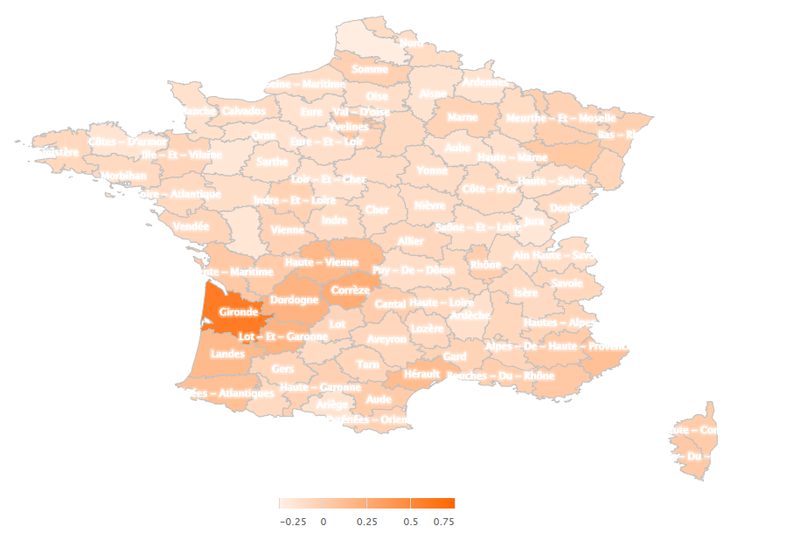
Who are the audiences of the two primary candidates on Facebook?
Thanks to the information Facebook holds, it is possible to draw a portrait of a candidate's audiences on the social network. SoPrism was thus able to analyse multiple factors to isolate Fillon's or Juppé's audience compared with the average French population.
Read on ReputatioLab →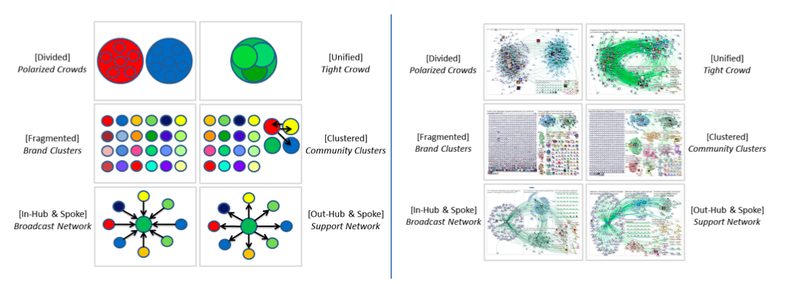
What the social web tells us about the right-wing primary
This weekend sees the first round of the right-wing primary. A chance to take stock of this election on the basis of data gleaned from social media.
Read on ReputatioLab →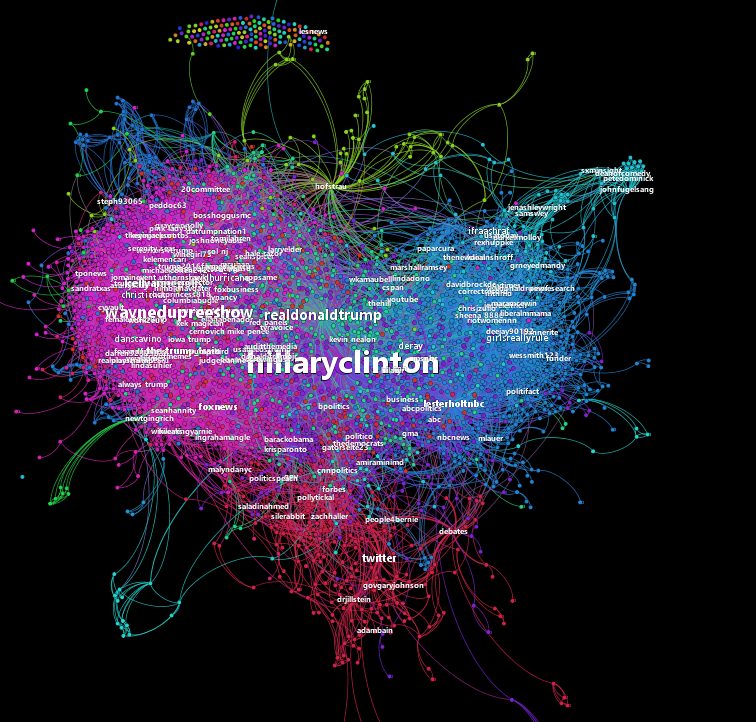
How are the two American camps mobilising around the Hillary-Trump debate?
Well used to political mobilisations around political debates, I had never before analysed activist movements in the United States. The Trump-Hillary debate offered me a golden opportunity to remedy this omission. Analysis via Visibrain. I.
Read on ReputatioLab →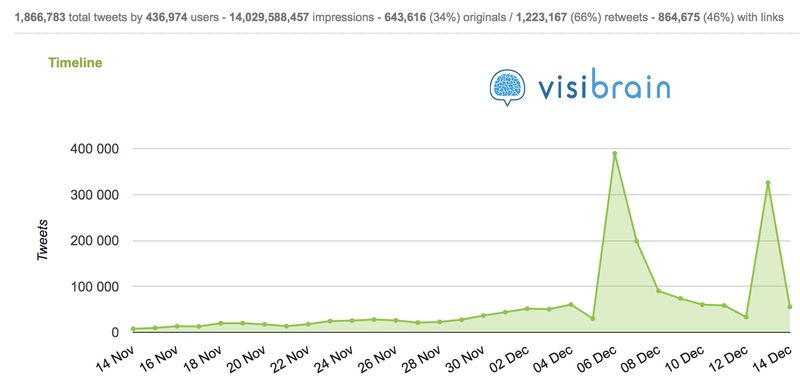
#Regionales2015: the FN flees Twitter in the second round
Until now I had never analysed an election day on social media. That is why I decided to carry out the investigation by analysing both rounds of the regional elections on Twitter.
Read on ReputatioLab →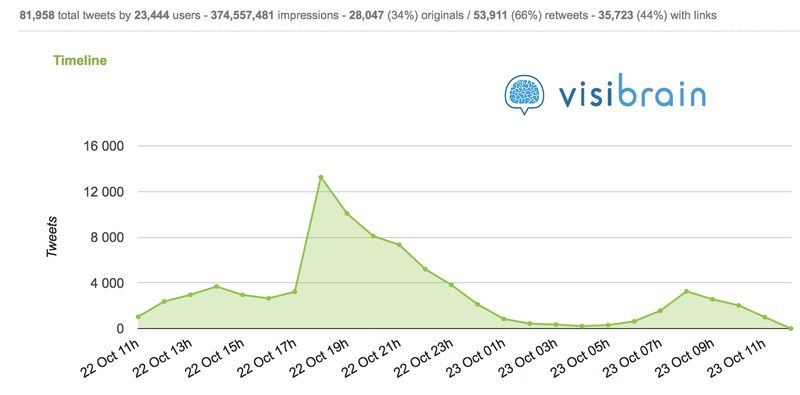
MLP on #DPDA: for fear of a media highway, a highway is handed to the FN
Marine Lepen was the guest on “Des Paroles et des Actes” on France 2 on 22 October. Yet she turned down the invitation at the last minute, citing a “charade”. The reason? The programme's format kept changing because of pressure from Nicolas Sarkozy and Messrs.
Read on ReputatioLab →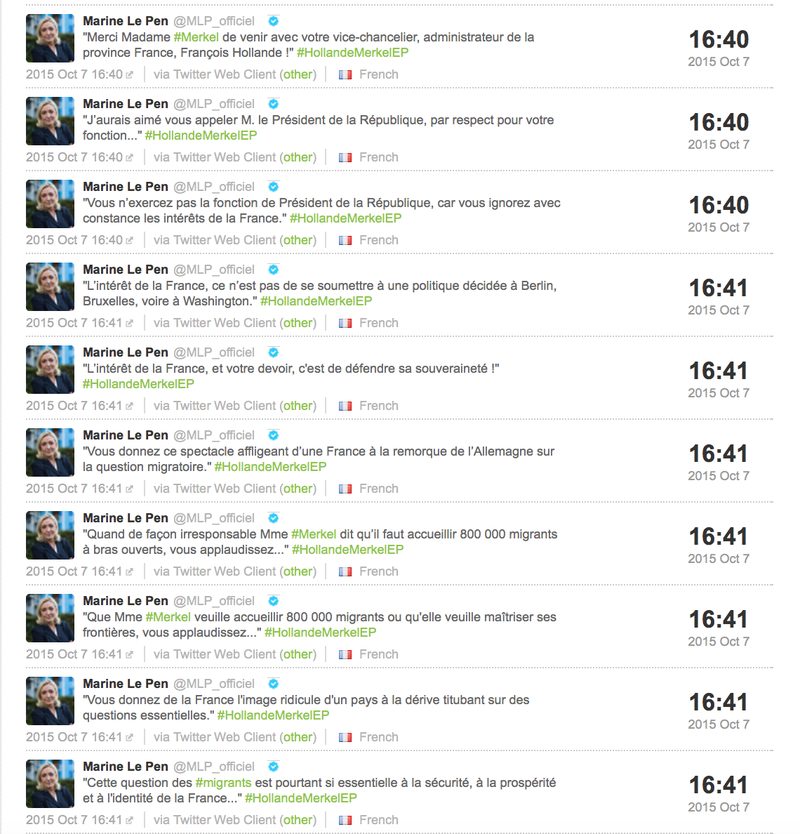
#HollandeMerkelEP: the FN organises on Twitter
This summer, I had many opportunities to comment on the actions of far-right groups on Twitter. While these were not organised in any structural way, the action carried out yesterday on the occasion of the speeches by François Hollande and Angela Merkel was quite different.
Read on ReputatioLab →
François Hollande: after the descent into hell, a reputational spring?
At the start of this year, French President François Hollande had decided to launch a communications offensive. He wanted to restore his faltering early communications by mounting a carefully chosen offensive. The events that unfolded gave him a way to restore his image.
Read on ReputatioLab →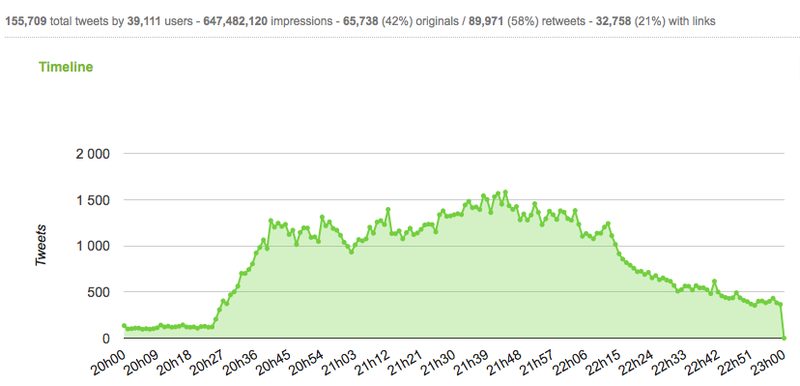
Analysis of the conversations around François Hollande's address to the French
After analysing the conversations around Sarkozy during his dramatic return on France 2, I repeat the exercise with an analysis of the conversations on Twitter during François Hollande's address to the French.
Read on ReputatioLab →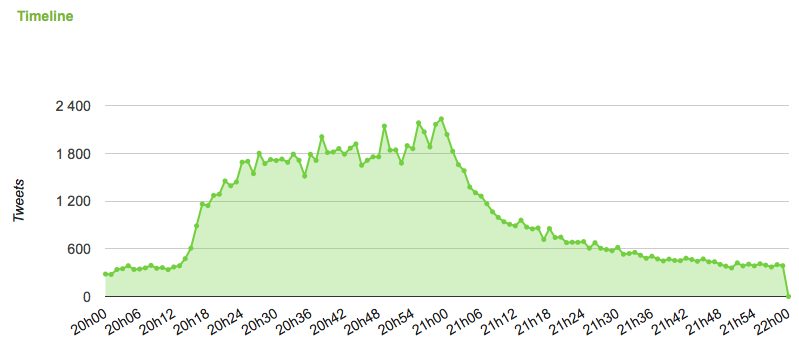
How do political discussions unfold on Twitter? The Sarkozy case
They have stirred up passions on social media since its birth: they are commented on in real time, describing or commenting on every movement of the tongue, every gesture of the arm or every little phrase, while the political parties prepare the ground, sometimes for weeks, and try to rally troops to their causes.
Read on ReputatioLab →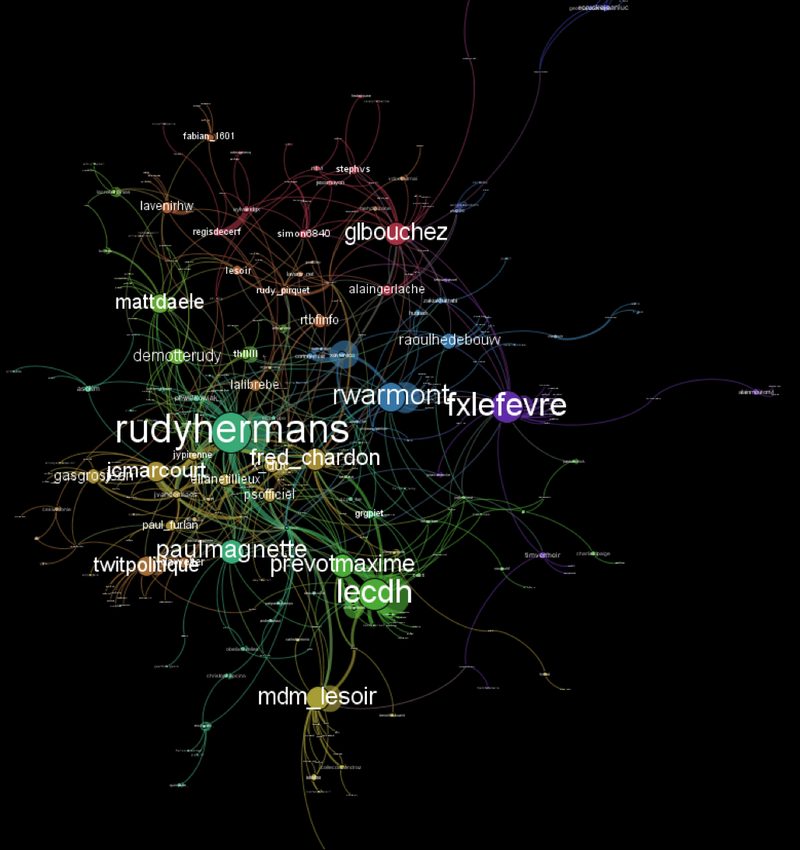
E-reputation analysis of the announcement of the Walloon government
On the occasion of the appointment of the Walloon government, I took part in developing an e-reputation barometer of Walloon politicians in collaboration with a new e-reputation agency in Belgium, Reputation365. Besides the work done on the algorithm and the collection of statistical data, I produced a mapping of the twittosphere around this event. I. Analysis 1.
Read on ReputatioLab →