




Over the past 10 years, a number of changes in information have had a major impact on organisations and have upended the way reputation, societal issues and information are managed within them. What are they?
- The rise of digital traces and their impact on individuals and organisations : we produce traces, and the main problem with them is that the context of production is not provided, so that when someone consults a digital trace, they have a different context at the time of consultation.
- With the arrival of social media, we all received an incredible power: the power to publish. However, this power has not been grasped by everyone in the same way: extremists and radicalised people post far more than others, which leads to an overproduction of extreme content. Alongside this, the democratisation of content production has enabled the production of hyper-niche, ultra-specialised content.
- Anything can be filmed or photographed : with the arrival of smartphones, everyone has become a potential camera. This creates a world where the illusion of reality is everywhere, even though a photograph can be framed, put in perspective or contextualised differently.
- Platform architecture : algorithms have created a system with an imbalance of power in which organisations do not have access to audiences sometimes activated by third parties.
On top of this, growth should be even stronger, as digital traces will be able to be generated by artificial intelligence. Added to this will be even more videos, where face and identity recognition will make it possible to search for people in videos on that basis. The illusion of reality can even be faked with deepfakes, which gain in intensity every year. Finally, the explosion in the fragmentation of social platforms will make it impossible for organisations to counterbalance every narrative. (and even to monitor them) In short, we are heading into another 10 years of major information shifts that will change our profession!
The arrival of digital traces and what it means for organisations and individuals
January 2015: when the names of the Charlie Hebdo attackers emerge, it is easy to build a history.
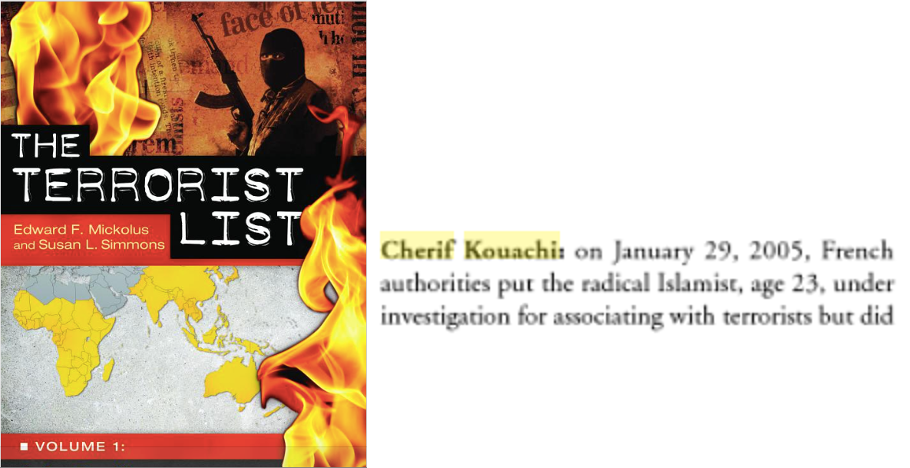
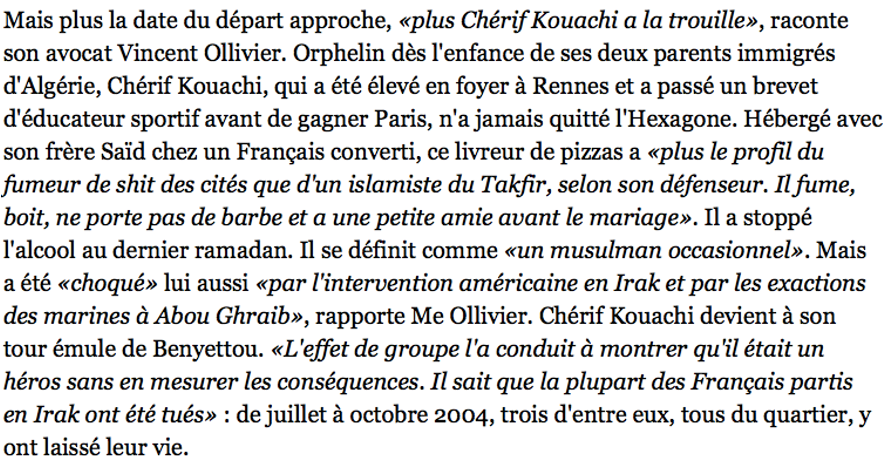
Indeed, without being an intelligence service, it is easy to see that he is on the list of terrorists cited in a book on Google Books, while a Libération article shows that he had already been convicted of offences, describing him as an occasional Muslim since he smokes and drinks.
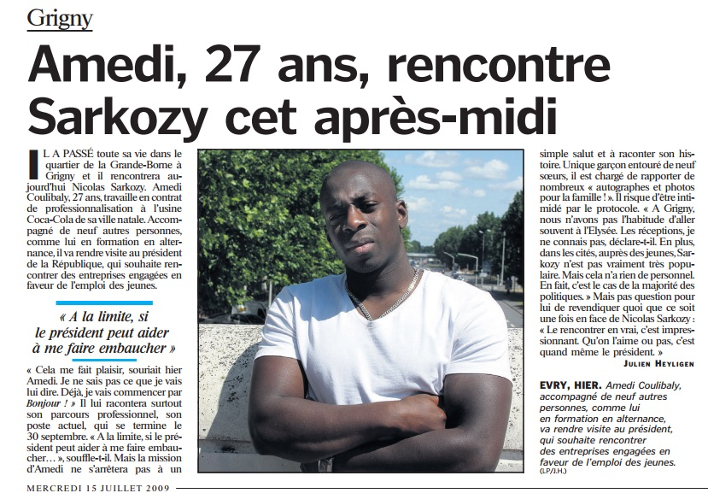
Similarly, Amedi Coulibaly appeared in a Le Parisien article in which we see that he met Nicolas Sarkozy.
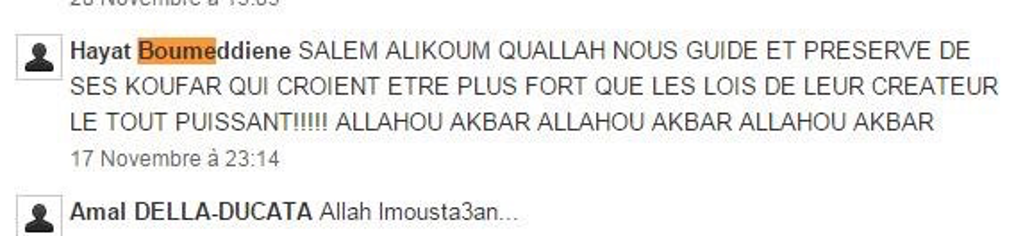
As for his partner Hayat Boumeddiene, we can detect a very radicalised comment she posted, which gives a more or less clear view of her state of mind.
The great tragedy is that there are namesakes who then share his digital identity. Someone will therefore receive an enormous number of negative comments, personal attacks and more.
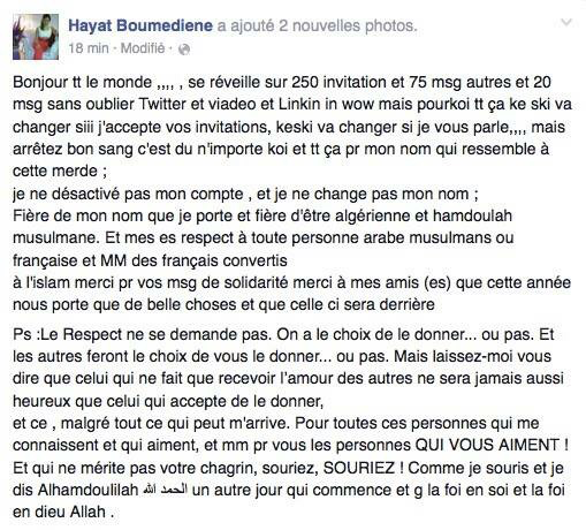
This small example shows that as early as 2015, with digital traces alone we can simply retrace key information about people whose names are the only thing released.
One implication is that we are now able to carry out a historical review and therefore to compare two statements on the same subject at different intervals, and so to reach a completely different opinion, since the context of production will be totally different from the context in which someone consults it, that is, when I publish something on social media
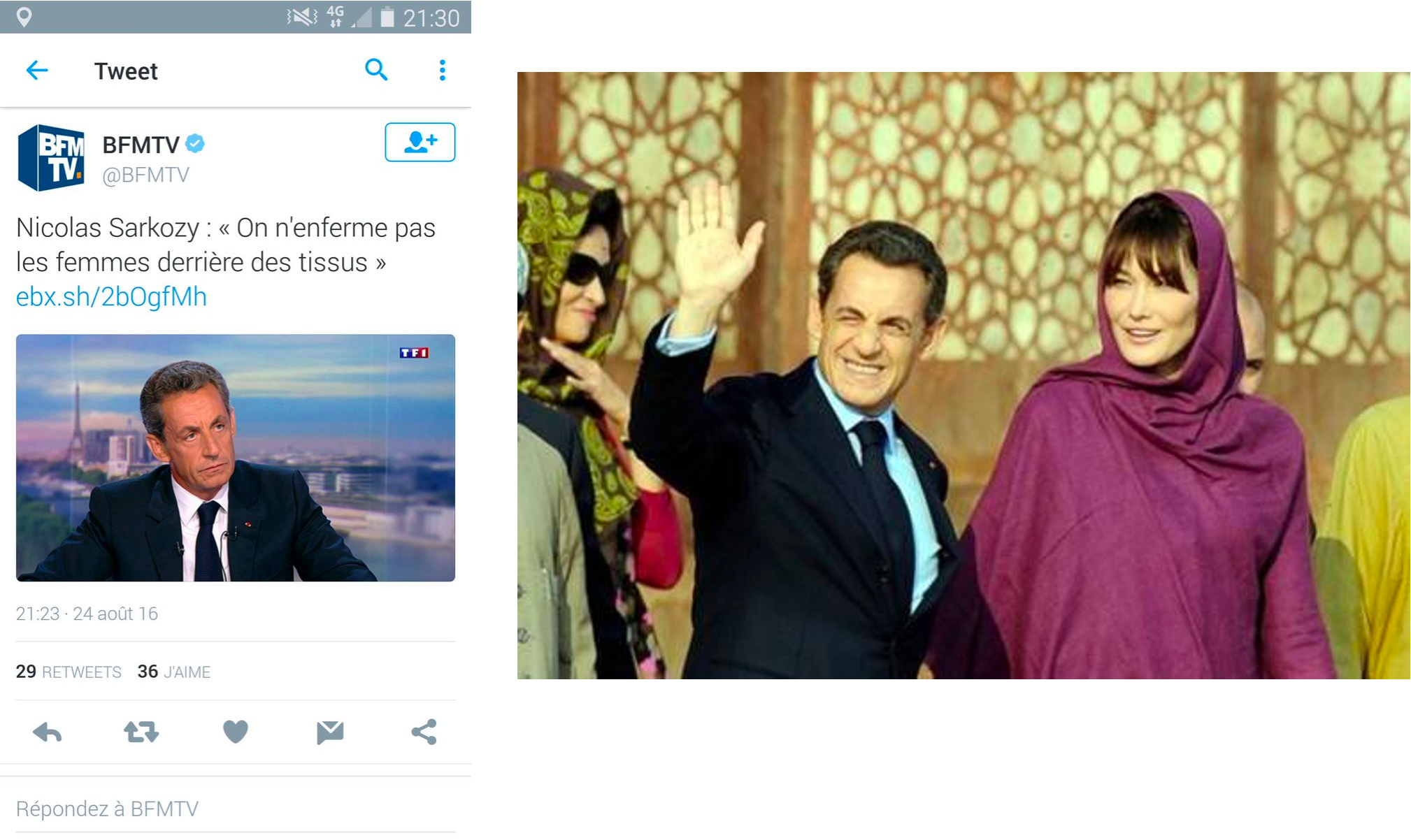
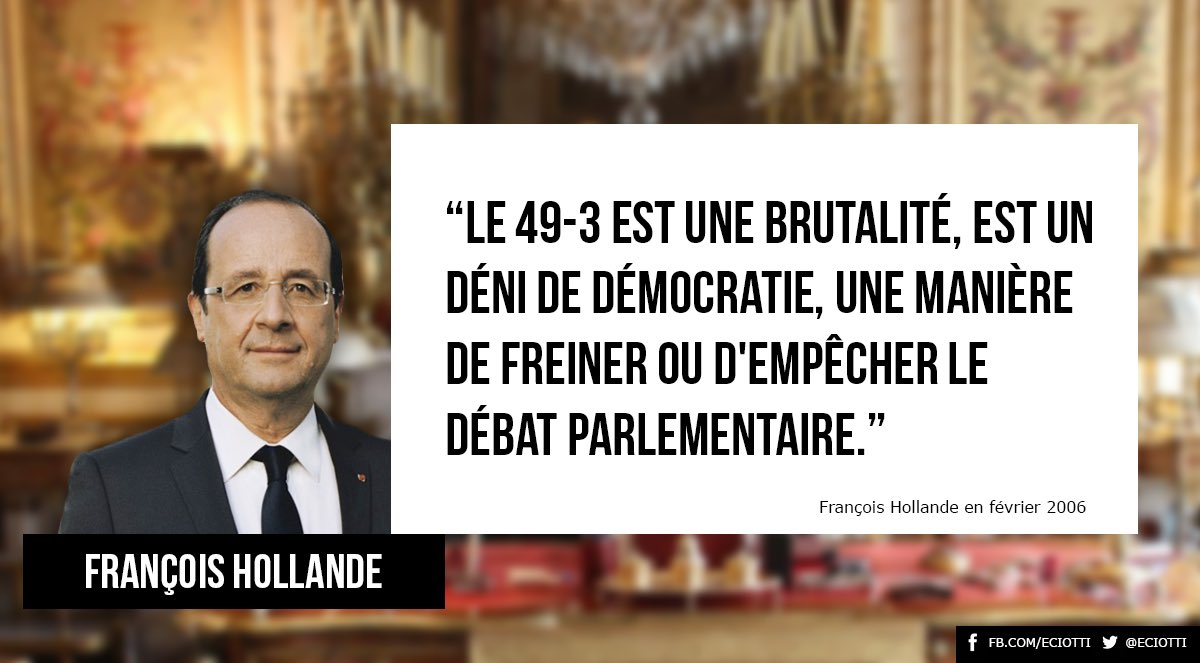
This already existed, and one of the most visible examples in the media was François Hollande on the 49.3, which he had criticised in opposition and used to the full once in power.
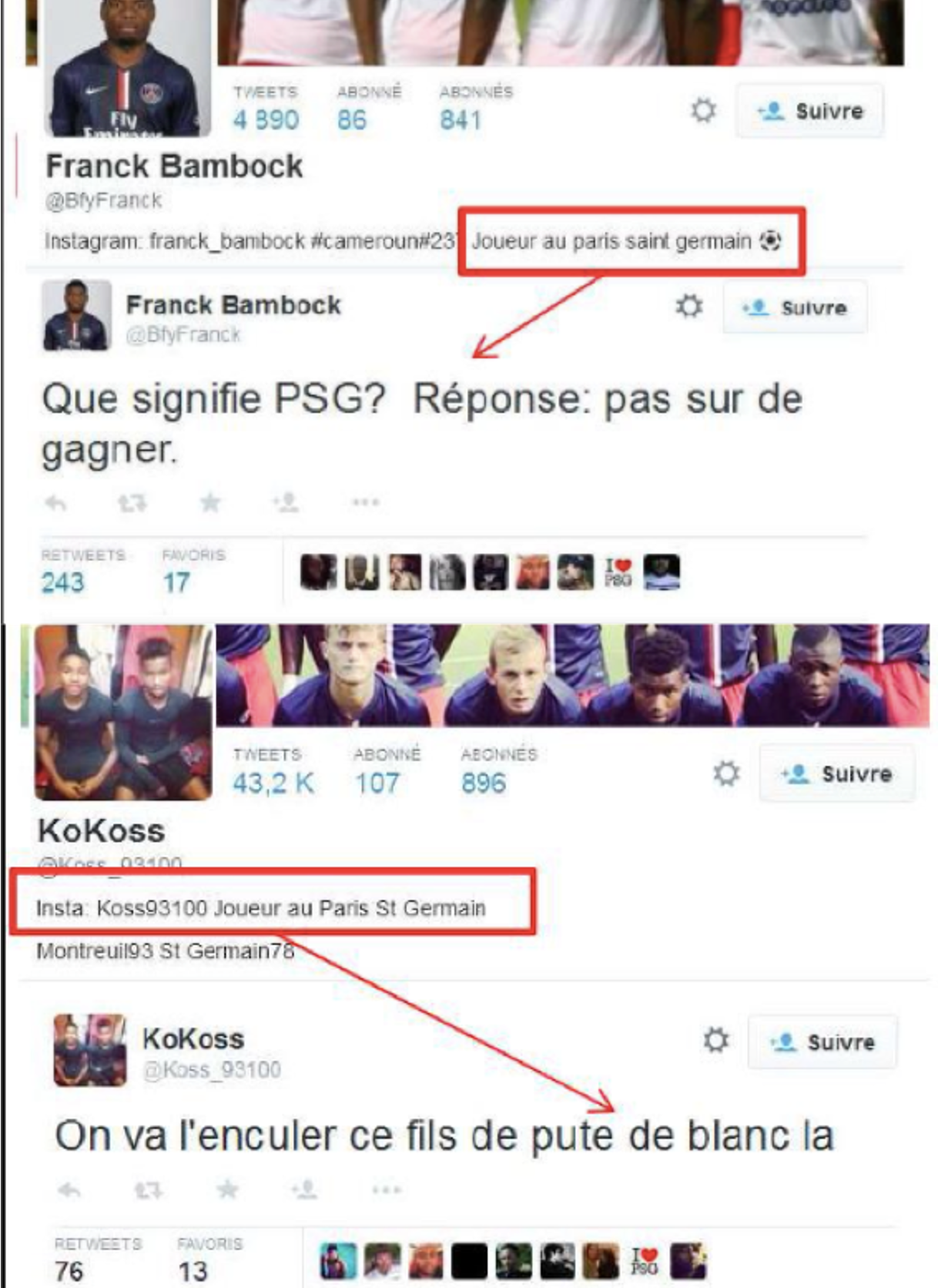
But what changes is that changes of status are even more problematic. A person who creates a buzz can suddenly come under close scrutiny. The most illustrative case is that of professional players. A number of PSG players were teenagers commenting on football on Twitter. Once they became professionals in a Paris Saint-Germain team coached by Laurent Blanc, internet users dug up statements about PSG or about Laurent Blanc.
Conclusion and major change: It is therefore important to think about your messages over time. There is indeed a difference between the context of production and the moment when people consult what we have produced. The world evolves, status evolves, and so the same message can be interpreted differently. You therefore need to think about your reputation over the long term and anticipate societal change.
Everyone can become an information producer: the information market becomes extreme and specialised
With the arrival of social media, we all received an incredible power: the power to publish.
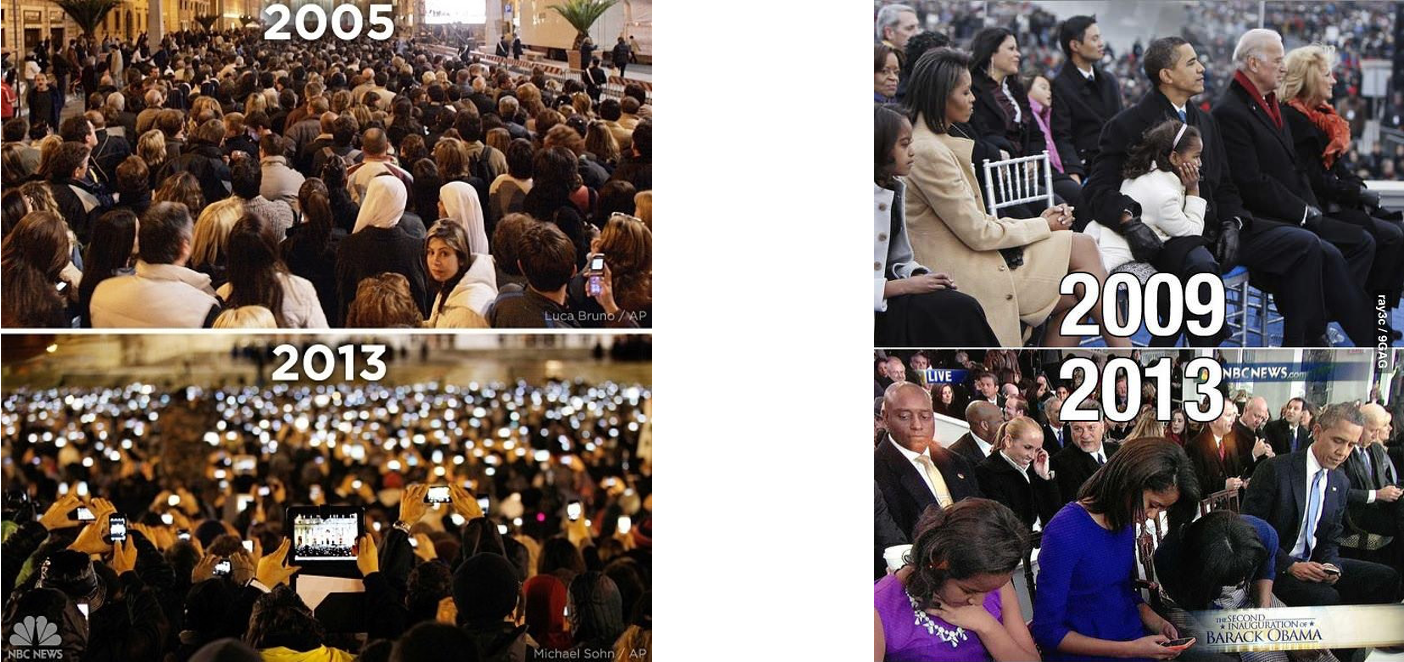
However, this power has not been grasped by everyone in the same way: extremists and radicalised people post far more than others, which leads to an overproduction of extreme content. Alongside this, the democratisation of content production has enabled the production of hyper-niche, ultra-specialised content.
Anything can be filmed or photographed
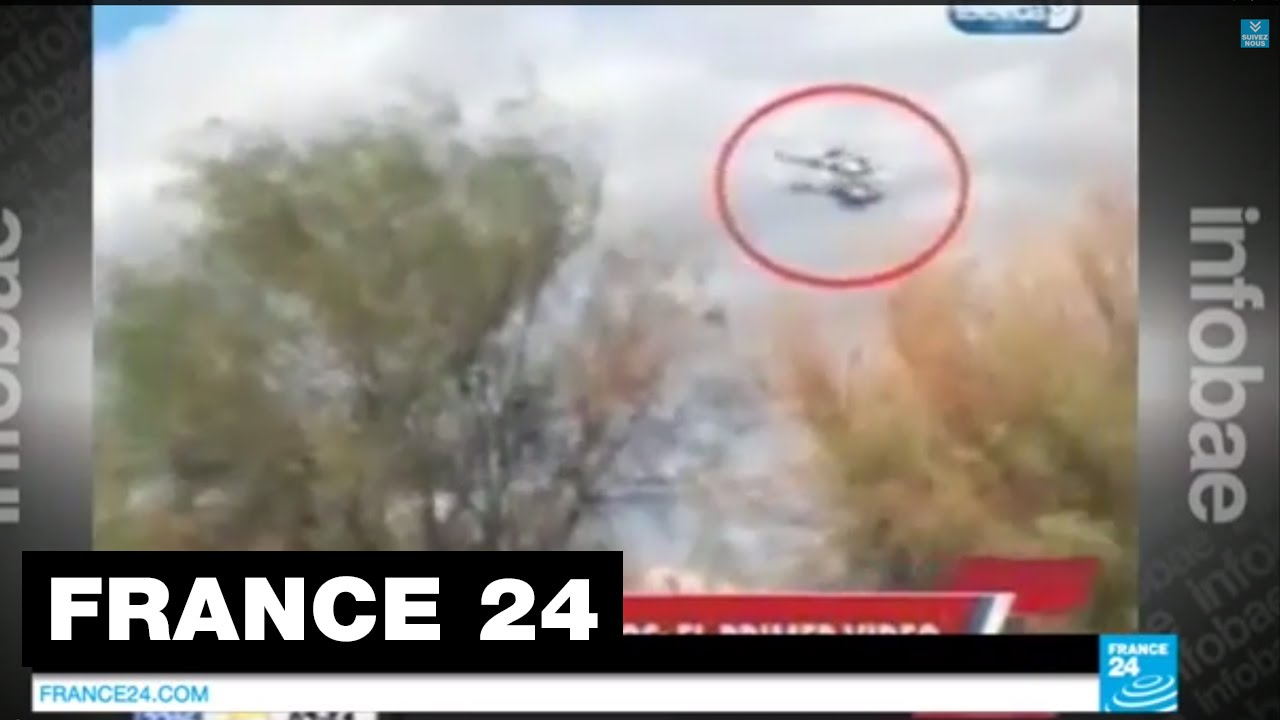
In fact, we live in an age when anything can be filmed or photographed. When a helicopter from TF1's “Dropped” programme crashed in Argentina, we had almost immediate video of the tragedy.
This change has made organisations' employees important crisis factors. The first cases began in 2007 with a Comcast employee in the United States who was filmed by a customer asleep on the customer's sofa while he was supposed to be installing cable in the flat. Sometimes it is even the employees themselves who film and release a problematic video, like the two Domino's Pizza employees in 2009 who filmed themselves putting bogeys into the pizza toppings.
The fact is that with the arrival of smartphones everyone has become a potential camera. With the rise of these new technologies, we observe new reflexes. In August 2014, for example, a McDonald's customer received her hamburger. She opened it and discovered a swastika drawn on the bun.
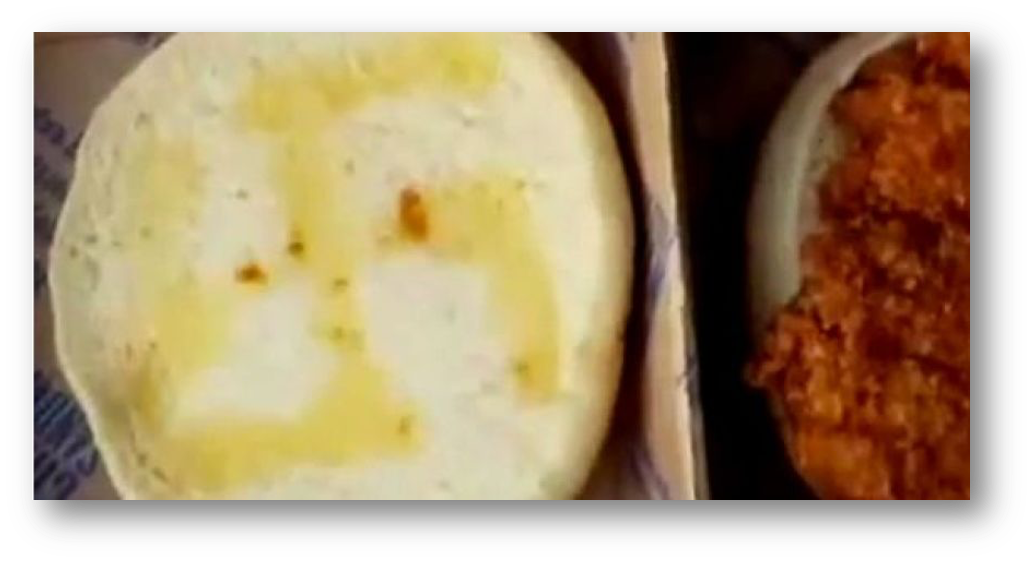
- Whereas in the past her first reflex would have been to speak to the restaurant manager, she rushes to photograph the offending item and post it, alerting the press, which will not fail to devote many articles to the incident. While it was previously still possible to contest the version of events, organisations now face irrefutable material evidence. The only solution: bow your head and let the storm of agitation pass.
- This illusion of reality has several problems. First, an image or a video is framed. There is therefore an inside and an outside. One can thus show only what one chooses to show.
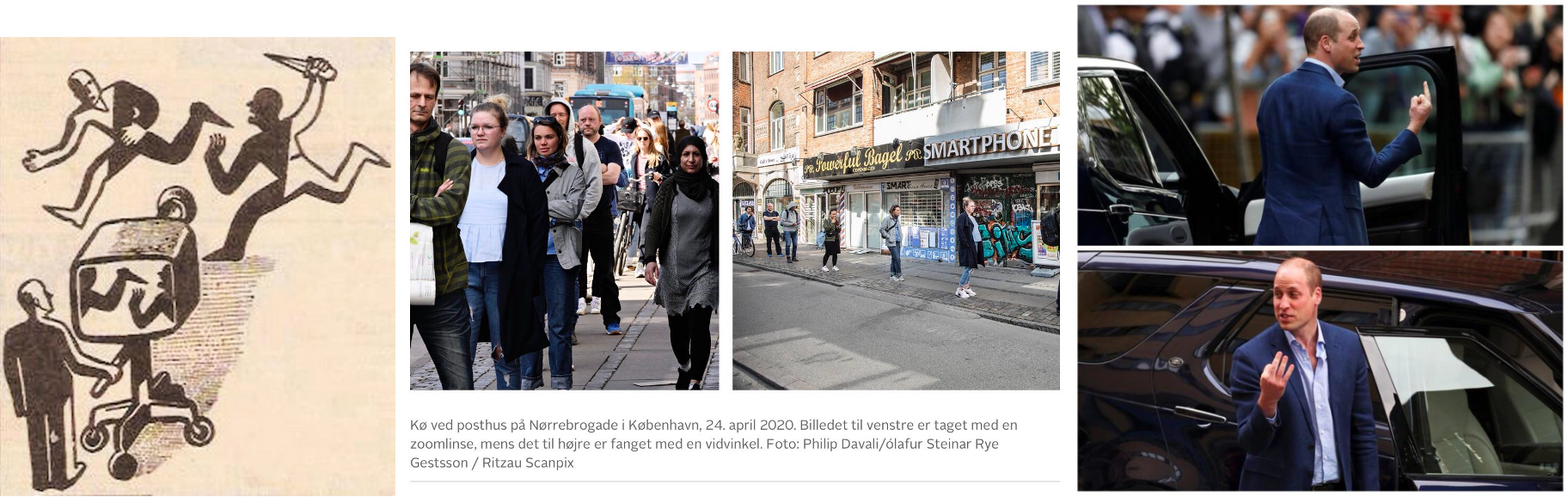
- Secondly, perspective can create a misleading illusion (see the two examples on the right)
- With videos, there is an edit with a before and an after, insofar as one can show a situation that follows from an earlier one that is not shown.
- Lastly, actors can sometimes post a photograph and write a context or narrative that does not reflect reality. If I take a photograph supposedly taken in South Africa in 2017, when it actually dates from 2019 and was taken in Korea, I can deceive a large number of people.
The imbalance of power
At the outset of social platforms, content had to be ranked automatically. In traditional media, an editorial board decided which items were primary and secondary. That is when the like appeared: if people like content, the probability that other people will like it too is high. At first the idea was good, but it brought out content of little informational value (cat videos, buzz, jokes, etc.). It also created an imbalance in which NGOs could generate enormous media volumes (for example Kit Kat and palm oil), whereas companies could not get the same subjects off the ground. (Palm oil) This produced a platform architecture that favours sensational content at the expense of in-depth content.
During a controversy around JC Decaux, which had censored an advertisement showing Simone de Beauvoir's behind:

The same day, to the same initial audience, I post on the subject.
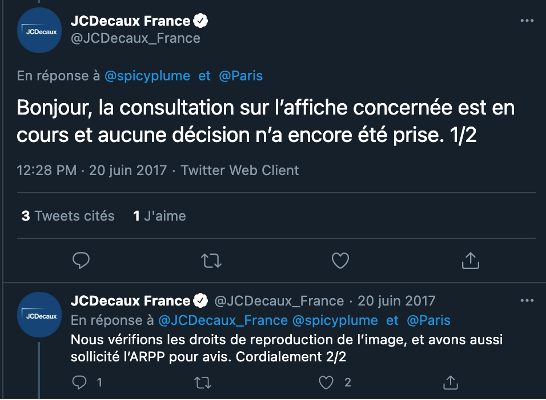
The difference in impressions was drastic (2k versus 22k):
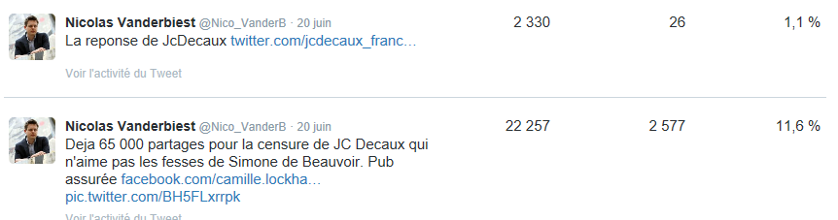
This means that if someone says something stupid, a lie or emotional content that needs correcting, the correction will never reach everyone who saw it. We are even very far from it, whereas with rights of reply in traditional media, audiences matched far more closely. Organisations are therefore in an ecosystem whose rules of the game put them at a disadvantage, insofar as even advertising cannot necessarily reach similar audiences again.